Monday, February 06, 2006

I was very excited about my herping outing on Saturday. I had seen posts on one of the herping forums about tiger salamanders (Ambystoma tigrinum) migrating to their breeding pools in Illinois, so I was thinking that with the rain last week some might have started moving around in our neck of the woods too.

I had met Kyle on one of the herping forums, and he offered to show me a spot in Gloucester County, New Jersey where he has found tiger salamanders several times in the past. I met him and his son Konner in a Wawa parking lot (I wonder how many Wawas there are in South Jersey), and from there we drove for a few minutes to reach a collapsed house in the woods. It was little more than a pile of concrete, tar roofing material, and cinder blocks.

It looked really promising, but after searching under nearly everything we could lift up, we decided the tiger salamanders were not yet on the move, at least not right there.

From there we tried some boards at another spot and found only roaches. We checked out some downed trees and discussed the herping ethics of searching under loose bark on dead trees. We should always leave things as we find them, but when you look under a piece of bark it usually comes off the tree in your hand, irreparably altering the microhabitat you just inspected. We decided that one should peek without removing the bark whenever possible. If one does remove some bark, one should make sure to remove less than half the bark on the tree. We found nothing under the bark that we checked, but who knows what lurked under the bark we didn’t check? I guess my satisfaction with my own ethical standards will just have to outweigh my unrequited curiosity.

We poked around some vernal pools and found nothing. I have never gone looking for salamanders in their breeding pools, but the idea is to look for anything moving in the water as you approach or gently move leaves around at the bottom. We were startled by a small fish in one (I guess that qualifies the pool as a permanent pond), but otherwise nothing moved.

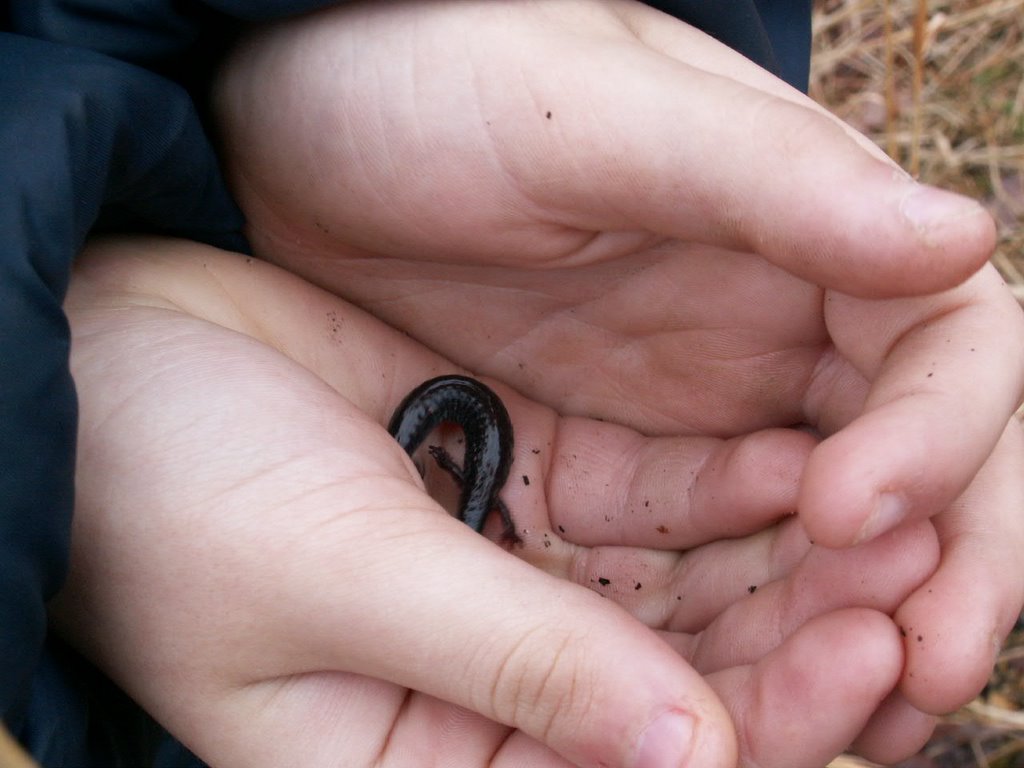
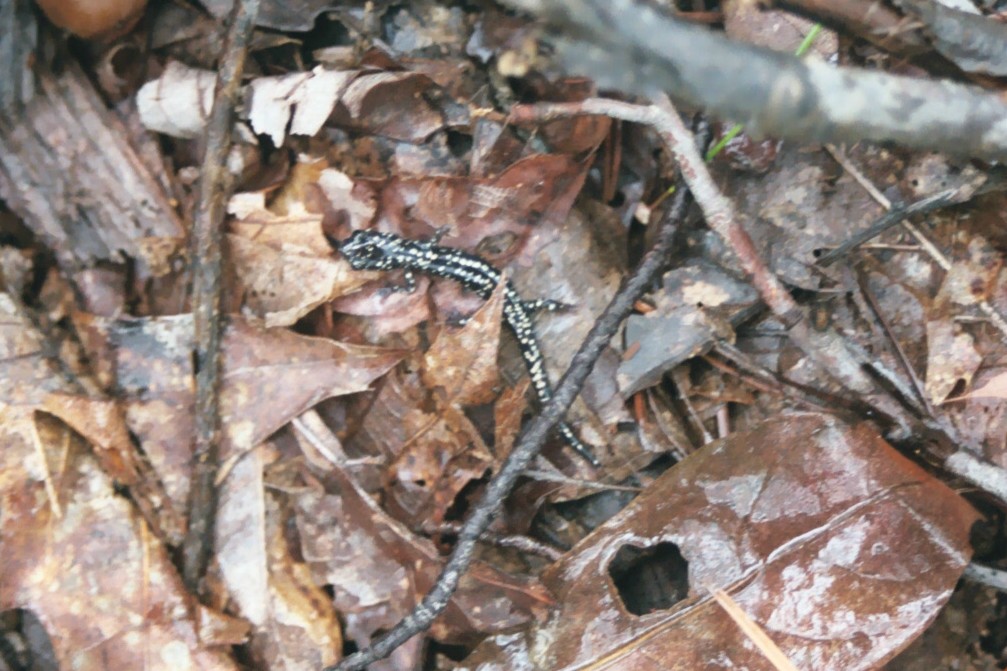
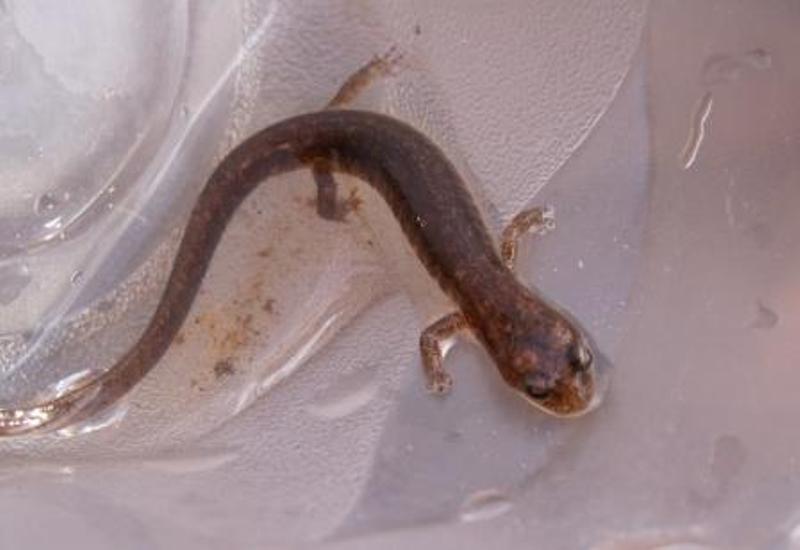
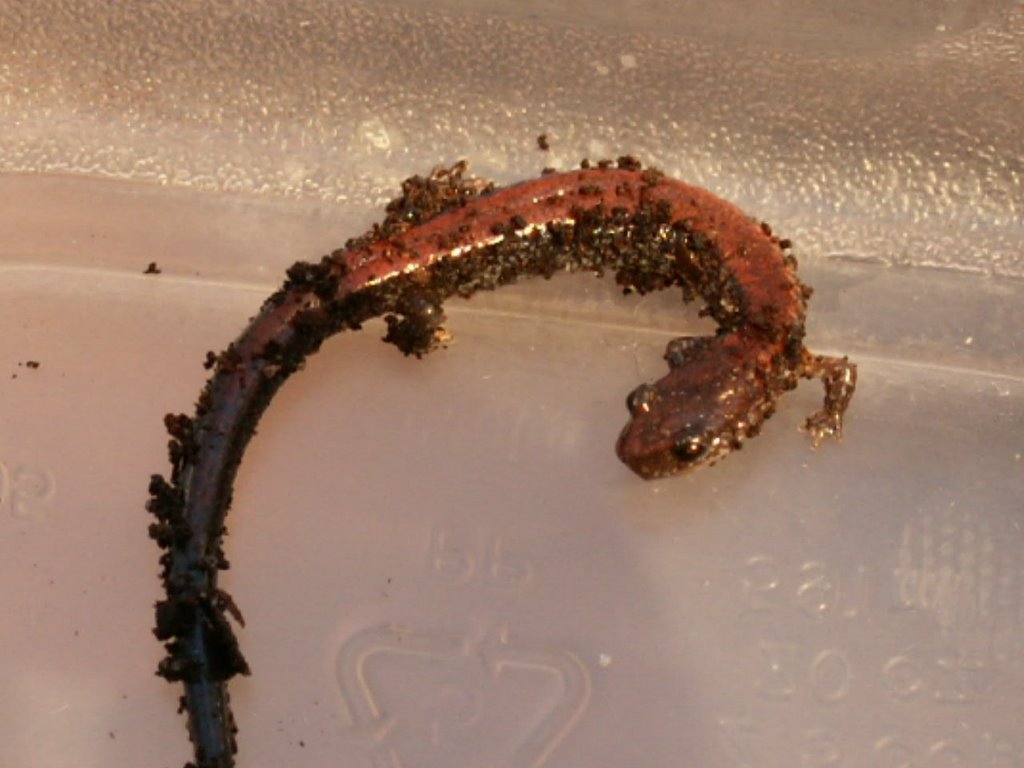
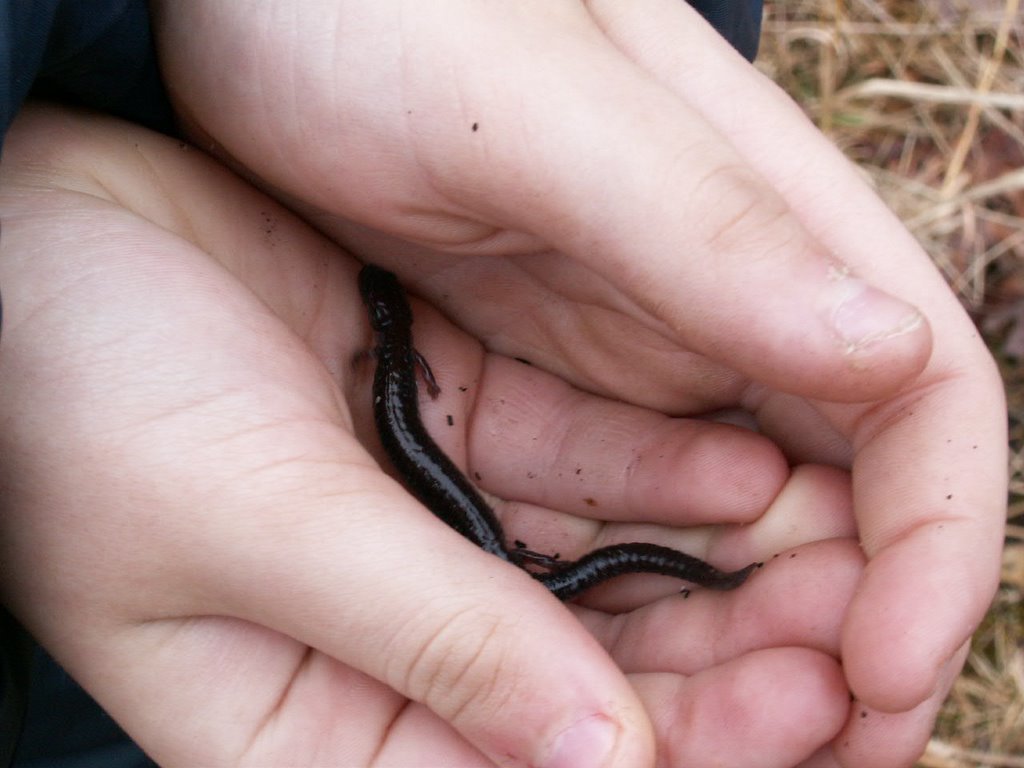
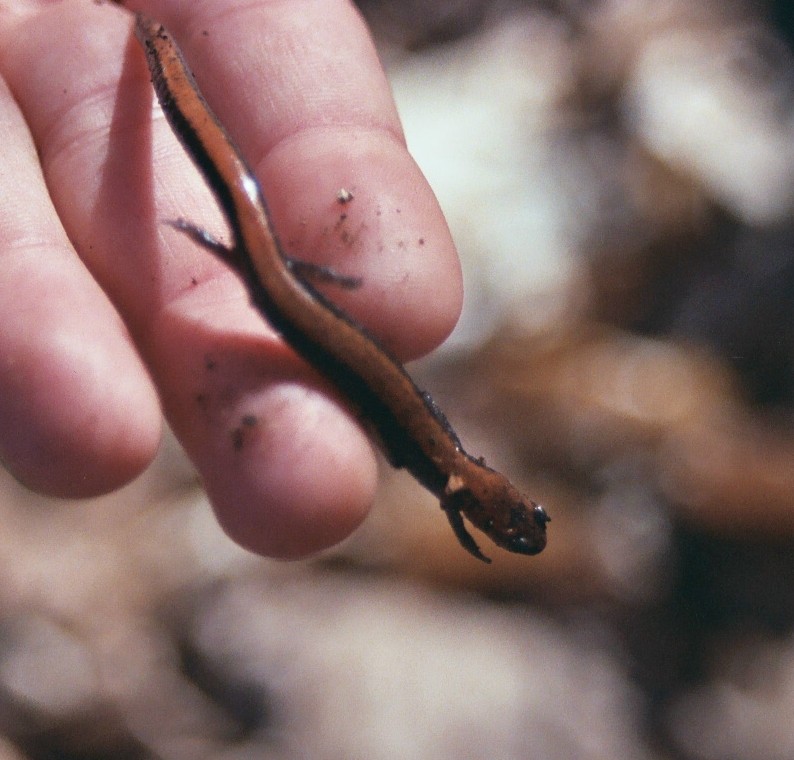
Our last stop was at a large dump site: countless tires, assorted car seats, a couple heaps of crab shells, and a large pile of construction debris in the middle of it all. By this point we had gotten the feeling that the tigers were still in their winter holes. It was also starting to rain; this would be our last stop. We did find one redback salamander (Plethodon cinereus). I’ve posted some photos of the more common red-backed phase that gives the salamander its name, but this one was of the also-common leadback phase. There’s no red and the sparkly dark gray covers the entire back of the salamander. It was very squirmy as Konner held it up for me to take a picture. I hope these two pictures, taken a split second apart, demonstrate how hard it was to get the little critter to sit still.


We found very little on our trip, but Kyle and I talked throughout. I learned a lot. Kyle’s been herping the region for a couple decades and seems to have found everything I want to find – even the supposedly really rare scarlet snake (Cemophora coccinea), timber rattlesnake (Crotalus horridus), the majestic northern pine snake (Pituophis melanoleucus melanoleucus), and the gorgeous coastal plains variation of the eastern milk snake (Lampropeltis triangulum triangulum). It is no small favor to share the locations of your trusty herping spots (we all fear the day someone might come through and wipe out the old friends we visit and take pictures with every year), and I greatly appreciate Kyle’s trust.

A couple related points: I have recently signed up to take part in the New Jersey Herp Atlas project. This is a way to communicate your herping observations in New Jersey to the state so that the information can be used to support conservation. I have added a link to the Herp Atlas website to the links at the bottom right. If you would like to see pictures and learn more about the NJ herps I've discussed, see the other great website I've added to the right, the NJ Department of Environmental Protection's Online Field Guide to Reptiles and Amphibians.

Sunday, January 29, 2006

I have been procrastinating about posting the finds from our honeymoon in Brazil for two reasons. One is that I am a bit embarrassed by how little I found. There are several reasons why we got skunked, to use the official term: there was a drought where we stayed in Bahia, and droughts frequently keep herps inactive; we were on a honeymoon, and we focused on activities other than herping, such as swimming, horseback riding, kayaking, sightseeing, and other touristy stuff; and we did not pick as bio-diverse a honeymoon spot as I had initially though.

The other big reason I’d been procrastinating was I was worried that after I post these finds, I might not have anything left to post for the winter. However we’ve been having warm weather so far this winter, and I’ve discovered the joys of winter salamandering. I had been thinking about trying to stretch out the honeymoon into four or five posts, but I think I'll still have enough material to carry my through the winter if I cover the honeymoon in three: the lizards at Jocotoka (the resort), our trips elsewhere in Bahia, and our hike in the Tijuca park of Rio de Janeiro.

Oh, one more reason for procrastinating: poor photo quality. We had major camera difficulties in Brazil, and while I'm not a photographic perfectionist when it comes to herping, I am embarrassed by these. Unfortunately they're what I've got, so please be kind.

The Geckos

I’m not a big fan of invasive, exotic plants and animals, but these guys were entertaining. I’m pretty sure they’re Hemidactylus mabouia, a gecko native to Africa that has colonized nearly every human-inhabited tropical place on the planet. They’re usually called ‘tropical house geckos,’ because they live around houses almost everywhere in the tropics. Wherever you go from South Florida to southern Africa to Australia, you will find them or a close relative hanging around lights to pick off the moths and other insects that can’t help but flutter on in. I had assumed that they are exotic but not invasive. There are many species that naturally inhabit environments that are similar to the environments we create. These do well wherever we go, but often don’t go any further. Pigeons are a good example. You see pigeons (more properly called rock doves) all over cities because they naturally inhabit rocky cliffs and eat grass seeds. Flying around cliffs and pecking at grass seeds is a life not too different from flying around buildings and pecking at crumbs. Pigeons don’t displace any native wildlife in most places because most places don’t have wildlife native to cities.

I had assumed that the tropical house geckos are similar, that they’re good at ambushing bugs around lights on buildings and do not get much beyond modern human habitat. However R. D. and Patricia Bartlett in their Reptiles and Amphibians of the Amazon comment that they have been known to hurt populations of smaller geckos, so I guess they’re not so benign.

Since most geckos are nocturnal, we had to wait until the evening to see them. At our resort we stayed in a sort of luxury cabin and ate meals at the main building. The first gecko we saw was inside our cabin. We entered and flipped on the light to catch it frozen a few feet down from the hole in the ceiling from which the ceiling fan dropped. Every time we came inside it stayed still until we moved close. Then it ran up and through the hole.

We soon found another gecko living on and around a wall on the inside of the cabin. We named it Side Gecko. We started referring to Ceiling Gecko by name to differentiate the two.

It was not long before we found a gecko that kept to the top of the wall (the walls in our cabin did not meet the roof) to the left of our front door and above the light next to the door. If we came too close it would run inside, and if we tried to come at it from the inside it ran outside. We named it Front Gecko.


A few times I spotted a very small gecko on the inside of the cabin either on the floor or on the wall next to the door. I named it Baby Gecko.

The last geckos we found around our cabin lived in the light fixture on the front of the cabin, the one above which Front Gecko lived. I was a little surprised by this choice of a home – it just seemed way too bright and way too hot for a gecko, but there they were. I suspect that they came out of the fixture when we were not around, but they were in there whenever we looked.


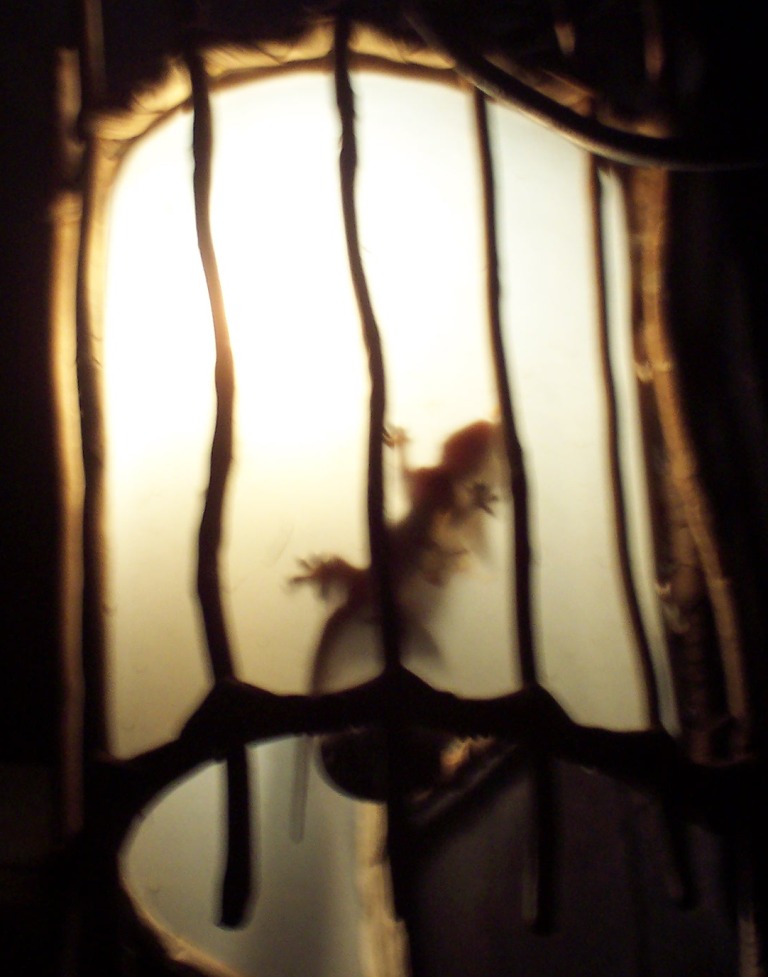
We spotted geckos everywhere there were lights, not just in and around our cabin. Here is a picture of a gecko inside a lantern at the main building.


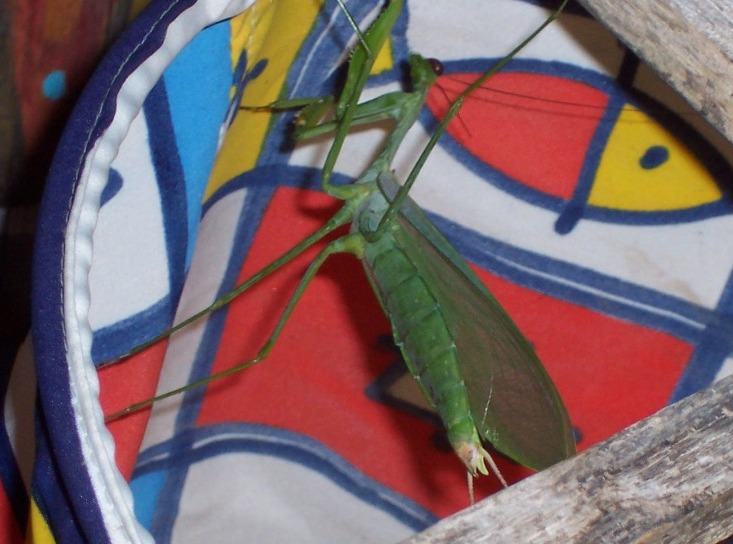
The last photo is not a herp, but it is a cool shot of something else hanging around another lantern.


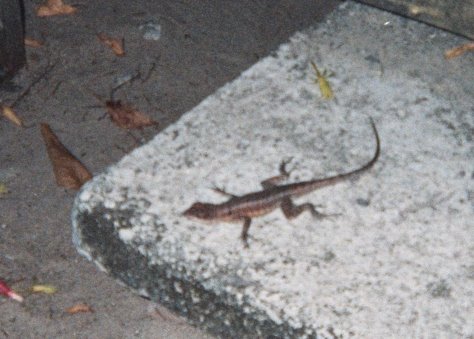
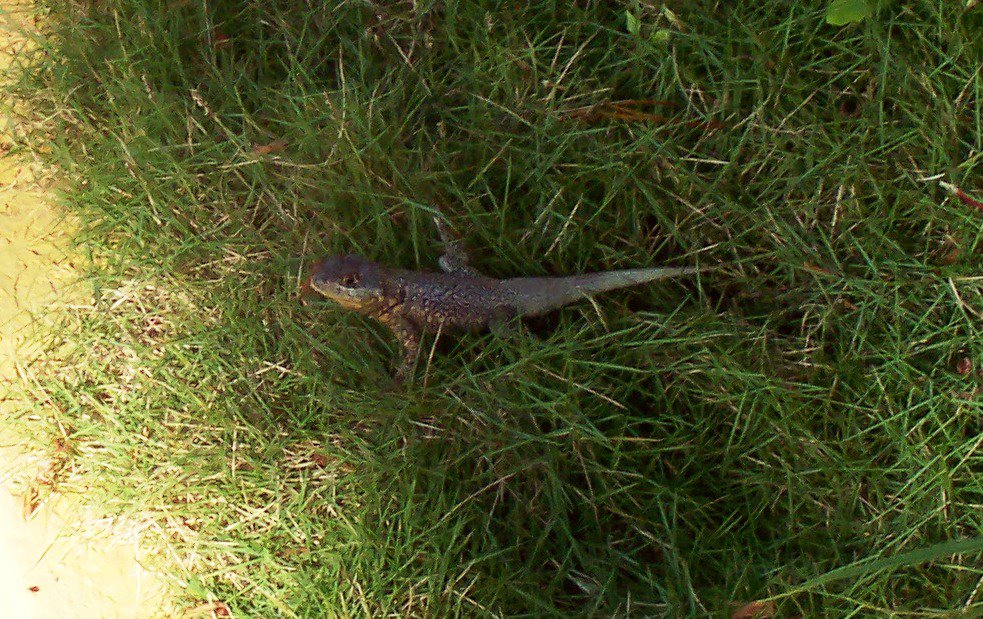
The other group of lizards that ruled the Jocotoka resort was Tropidurus torquatus, a species for which I have found no English common name. I haven’t even been able to find decent photos on the internet, and I’ve only been able to find a couple websites discussing them in Portuguese. I can’t tell you how frustrating that is – to not be able to find information on a species. I’m so used to the United States where we have great guidebooks, lots of herping enthusiasts, and scientists studying almost everything. There are no guidebooks covering the herps of Bahia or Rio de Janeiro, I have been able to find very few herping enthusiasts in Brazil, and there just aren’t as many colleges and universities in Brazil and thus fewer professors and grad students doing field work.

Anyhow, these were fast, active lizards. They stayed on the ground or close to it, in contrast to the geckos, which stayed up on walls and ceilings. These Tropidurus torquatus sat somewhere in the open, presumably to help them spot insects to snap up, to ward off competitors, and to attract mates.

The smaller individuals were strongly patterned in brown and lighter tans and grays.


The bigger they got, though, that pattern faded so that the largest (maybe 10 inches) were a really pretty gray with shades of pink and green and a faint, fine, wavy pattern.


All, though, had a strong black spot/dash marking at the base of the neck right above the shoulder. This species is part of the iguana group of lizard families, and I am assuming they follow the usual iguanine pattern of the males being the larger, more colorful, and more visible sex.

These guys displayed to the other lizards by sort of bobbing their heads and doing pushups. I could swear that they displayed towards me too; more than once a big male looked right at me and did some pushups – a lizard way of showing off to the slow, clumsy herper.

I’m not great at catching lizards. I think I’m a little too shy about squashing them. It usually seems that to catch them I need to move my hand too fast to avoid crushing them when my hand makes contact. Lizards are usually a lot less fragile than they look, though, so I need to work on overcoming this misperception.

There are other methods of catching lizards that don’t require quickness, and my favorite is noosing. Noosing sounds awful, but it’s probably the most pleasant method for the lizard. What you do is tie a noose made from string, fishing line, or fine wire to the end of the stick, lower the loop over the lizard’s neck, and pull up. It can be a little tricky to get the noose off, but otherwise it's a blast. I got pretty good at noosing the brown anoles (Anolis sagrei) that live near my grandparents’ condo in Florida, but I failed miserably with the lizards in Brazil.
This is a picture of me trying to get one on a tree trunk. Anyone who knows something about noosing lizards will recognize that this is nearly impossible. What happened here is that the lizard had run up the tree, I had the noose, and I thought I’d give it a shot.


I'll close with some more 'habitat shots.' This was a honeymoon after all.


Monday, January 23, 2006

I went out on another scouting trip Sunday afternoon. I know these scouting trips are probably starting to get pretty boring for you readers, but this one was kind of special: I went out to the Wissahickon seeking the lair of the Surprise Milk Snake (Lampropeltis triangulum triangulum).

This milk snake did not rob me of my leg or eat my partner, and I am not seeking revenge. Quite the contrary, it delighted me beyond belief and I am looking forward to our reunion for some photographs.

The Surprise Milk Snake is actually the reason I started this blog. I was so swimmingly tickled by finding a milk snake within the city limits of Philadelphia, I told my herping buddy from Ohio Jay right away and I posted on http://www.kingsnake.com/ under the subject heading “Phillyherping.”

I had always thought of herping accounts as a literary medium for herpers from somewhere besides here: guys bagging puff adders in Kenya, hooking Western Diamondback rattlers in out West, or tackling Indigo snakes and alligators in Florida. Finding that milk snake was so overwhelmingly delightful to me, however, that I decided that even in and near Philadelphia there were herping experiences worth writing about.

So what was so special about this Surprise Milk Snake? I’ll write more about that later, but the short of it is that milk snakes are often difficult to find, they generally do not live in urban areas, and this one was gorgeous. To make the whole thing more magical, I found it under a rock on a very shady hillside in cloudy damp weather, rather than on a sunny hillside where you’re supposed to find snakes.

I found this amazing little snake that I had not been expecting to find, and that totally made my week. This year I intend to find more.

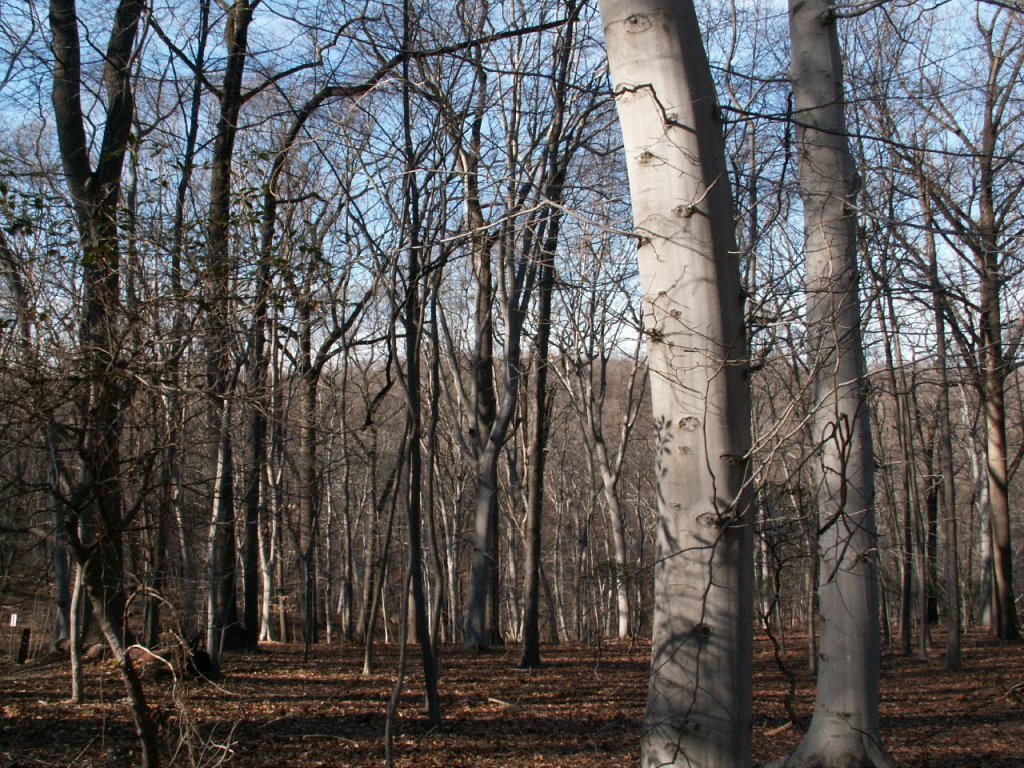
I started off perusing the hill behind the one on which I found the mystery milk snake. Here is the top of the hill, which, like much of the Wissahickon section of Fairmont Park, is dominated by beech trees.


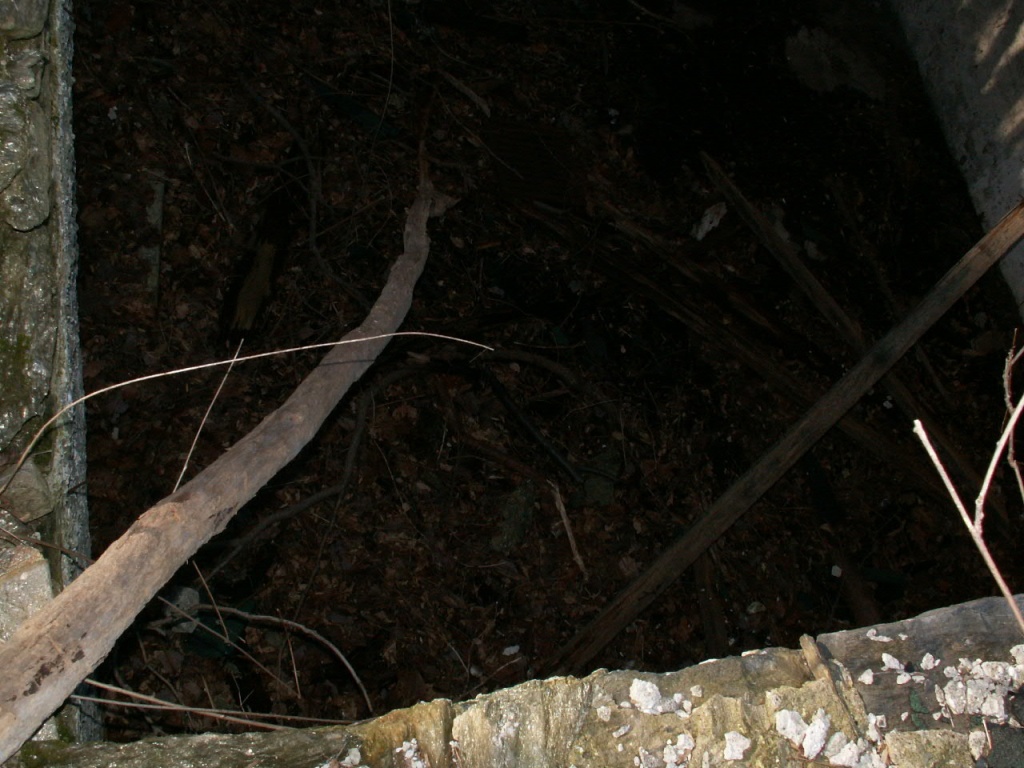
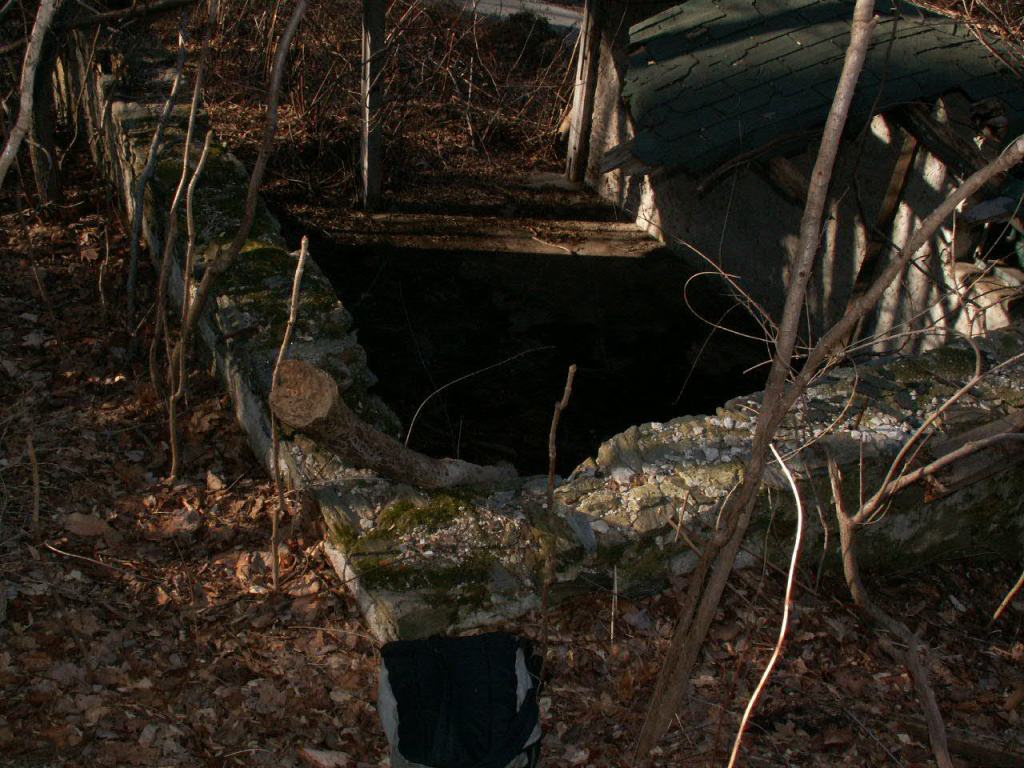
There was enough loose rock around to possibly make for some interesting flipping in the spring. I also found this collapsing shed. I’m a little embarrassed that I had never noticed it before, but the trail I usually take doesn’t pass near it and I think the heavy growth of vines and multiflora rose shield it from view on the other side.


Last, here is a picture of the hillside on which I found the milk snake. Notice the rocky outcroppings as well as the loose rocks on the slope. If you’re a snake or a salamander, all those loose rocks make for good hiding spots and all the cracks and fissures extending back into the hillside make for good shelter from the cold of winter or the heat of summer.


I’m still confused why it makes for good habitat given its shady northwest orientation, but I need to let go of that and take the snake as proof that it’s good habitat.

So, my goals this herping year:

4. Find red, spotted, and tiger salamanders (Pseudotriton r. ruber, Ambystoma maculatum, and Ambystoma tigrinum)
3. Find rattlesnakes (Crotalus horridus) in both the Pine Barrens and in Berks County, PA
2. Find red bellied snakes (Storeria occipitomaculata)
1. Find the Surprise Milk Snake

Tuesday, January 17, 2006

Yesterday I did take a shot at finding salamanders. I tried out Fairmont Park above the east bank of the Schuylkill around and northwest of the art museum. I found nothing. I’ll admit I only gave it about an hour of effort. I think the temperature was in the high 30s, and it was mostly sunny while I was out in the afternoon.

I spent the morning and much of the afternoon volunteering at Cobbs Creek Community Environmental Education Center (http://www.cobbscreek.org/) for the Martin Luther King Day of Service. The CCCEEC is a great institution that works to educate kids from the surrounding urban and suburban neighborhoods about the environment and what they can do to help it. We basically cleaned up piles of wood and construction still debris left from the floods in the summer of '04. I had my camera with me in case we uncovered anything, but I guess all the herps were well underground.

Here are some photos from an October 10th trip I took to a State Game Land on Blue Mountain. It’s a large area, so don’t worry that I’m giving away any specific sites. This was one of the last trips for my film camera. I went out with only a few pictures left on a roll, so I didn’t take any pictures of the 30+ redback salamanders (Plethodon cinereus) I found, and I took no habitat shots, which I now regret since it is beautiful country.

Here is a green frog (Rana clamitans melanota) that greeted me from a puddle next to the parking lot. I had one closer-up photo, but I like this one better with the frog peeking out from among all the pine needles and leaves.


Here is a photo of a young slimy salamander (Plethodon glutinosis) I found.


The last picture is of a northern ringneck snake (Diadophis punctatus edwardsii) that I found. You’ll notice it looks kind of dirty. Ringneck snakes don’t bite when you pick them up, but they do crap all over you and mix it all with a really powerful musk. They're gorgeous snakes, but you don't smell right for a while.


One last note - Eitan Grunwald (http://www.eitangrunwald.com/herptrips/) emailed me to let me know this blog has been put on his list of herping links. In case you're not already familiar with his wonderfully photographed accounts of herping adventures and the most comprehensive herping links page on the net (for real), go check it out. Be prepared to spend a few hours between his herping accounts and the websites on the links page - I know that every time I visit I spend a lot longer than I plan!

Sunday, January 08, 2006

Winter changes my perspective on the common salamanders. If I had found six salamanders of these three species in April, I'd count the trip a disappointment. In January at 45 degrees, though, and I'm happy.

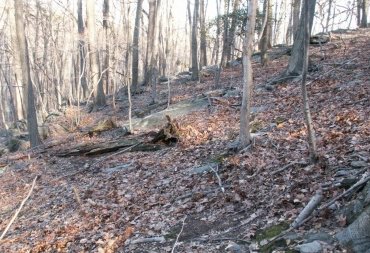
On Sunday I tried out a patch of woods in Bucks County recommended to me for vernal pools and spotted salamanders in late winter/early spring.


You could call today's trip a scouting trip. I meant to learn my way around and look for good spots, which I did, but I had read on some posts on the herping forums about guys in the southern Midwest finding spotted salamanders, so I was holding out some hope.

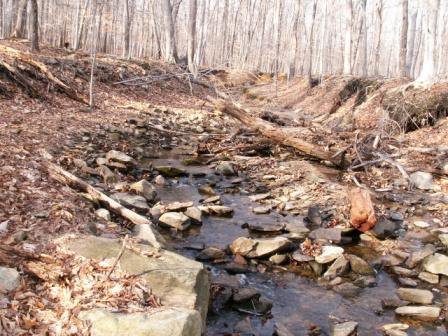
I scoped out the vernal pools and kept on hiking to explore. When I got to a rocky stream, I jumped in.


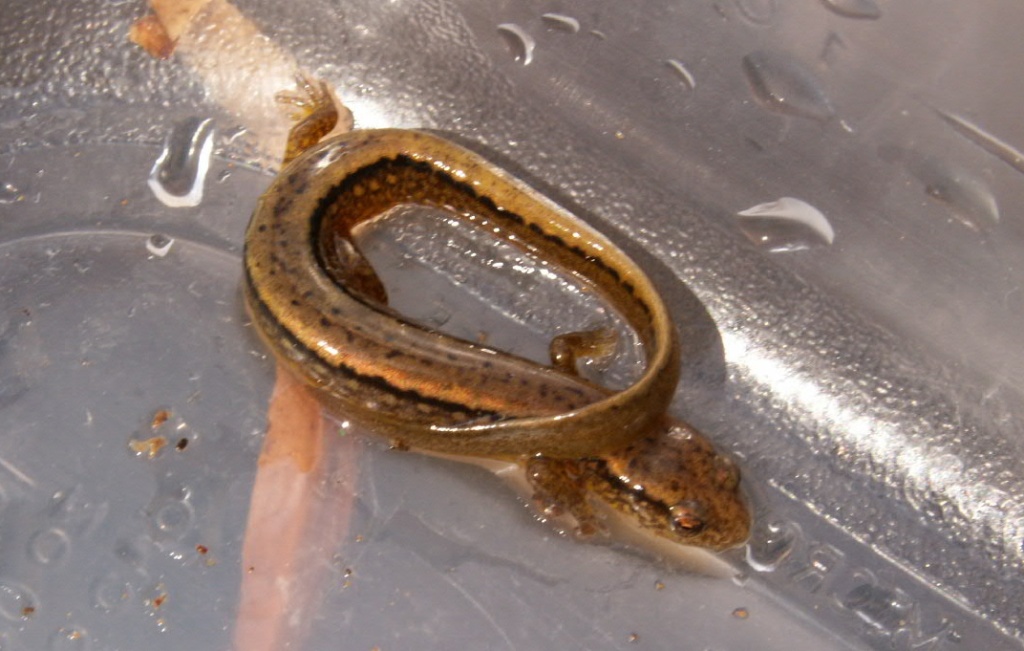
I pretty soon found two kinds of salamanders: two-lined salamanders (Eurycea bislineata) and a northern dusky (Desmognathus fuscus fuscus). They were all under rocks in shallow (less than an inch deep) patches, and all were tricky to catch as they wriggled under rock after rock. I caught two.

Here is one of the two-lined salamanders.


Here is the dusky. It is not full grown. As the name implies, these are not the flashiest salamanders out there.


I tore myself away from the stream since I wanted to finish up and get home before the Bengals game started. Against my better judgement I was drawn back to a wet, boggy area next to the stream.


I found nothing under the rocks there, but on an adjacent dry spot I found this little guy under a rock, one of the prettier redback salamanders (Plethodon cinereus) I've seen in a while. I've left the photo uncompressed so you can see just how pretty with the rich red back and those little sparkly flecks.


Trip Totals:

4 two-lined salamanders
1 northern dusky salamander
1 redback salamander

The Bengals lost.

Tuesday, January 03, 2006

I found nothing on New Years Eve, but I did try. I had never herped in the state of Delaware, but a herping acquaintance referred to an area of woods and Delmarva bays not too far from Smyrna. Delmarva bays are little ponds on the Delmarva peninsula. They generally do not hold water year-round and thus are poor fish habitat. The lack of fish, which eat amphibian eggs and larvae, make them great amphibian habitat at the right times of the year.

New Years Eve is not exactly the right time of year, but late winter and early spring are, when rainy nights bring out lots of ambystomid salamanders such as spotted salamanders (Ambystoma maculatum) and tiger salamanders (Ambystoma tigrinum) for their mass mating sessions (I want to call them orgies, but that doesn’t sound scientific enough). I have never found either species, so I’m eager to try. This, then, was a scouting mission.

I should do this more often. I got a little lost yesterday as I always do on my first time out to a herping spot, but since being lost did not eat into any productive herping time, it was time well spent. Next time I go out, when I’m actually hoping to find something, I should know my way around a little better.

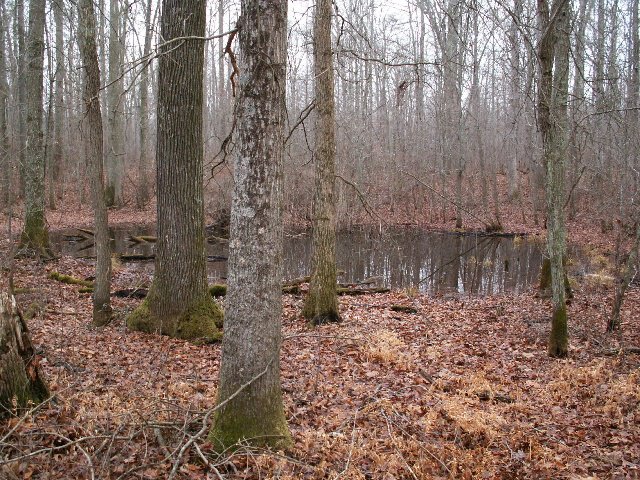
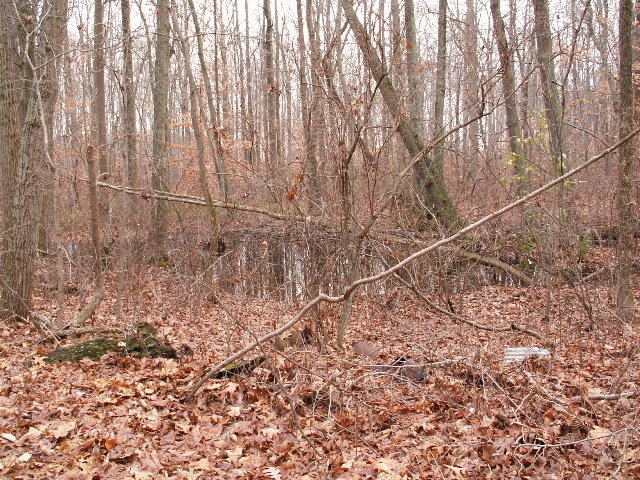
Here are a some pictures of the bays. The last one I took pictures of was on the large side – I’m not sure if it was a Delmarva bay or a normal pond.


For those who are interested in geology, Delmarva bays (http://www.dnr.state.md.us/naturalresource/spring2001/delmarvabays.html) and Carolina bays (they’re the same thing, just in different sections of the coastal plain) are enigmatic little ponds. They are several millennia old, and no one is sure exactly how they formed. Most have been destroyed for agriculture or development. They had more recently been covered by federal wetland protection laws, but due to a recent Supreme Court decision that takes the Army Corps of Engineers out of the business of protecting wetlands that are not connected to navigable bodies of water, they are again at risk (http://www.uga.edu/srel/Reprint/2704.htm).

Wednesday, December 28, 2005

Why are there no Christmas herp counts? I heard a talk show discussing the Christmas bird count, a nationwide survey of birds that takes place around Christmas every year. We herpers probably couldn’t canvass the entire country, but we could cover a lot of ground. Of course the time of the year would have to be changed to a warmer time of year. So an Easter herp count? A May Day herp count? The spring might be better, but I did go herping on Christmas this year, as well as the day after. I came out okay, so maybe the Christmas herp count isn’t completely implausible.

I was back in Roswell Georgia at the in-laws’, eating very well and taking part in the festivities. For Christmas I got Whit Gibbons’ Their Blood Runs Cold to add to my herping literature collection as well as some nice topographical maps for PA State Game Lands 106 and 110. I’m not getting lost again out there. I also got money, some of which I quickly spent on The Herpetology of China, by Kraig Adler Zhao, and a gift card to Barnes and Noble, which I exchanged towards Henry Fitch’s A Kansas Snake Community: Composition and Changes Over 50 Years, a classic work on herpetological ecology. Wow, all this really could give someone the impression that I’m obsessed.

Anyhow, I popped outside on Christmas to check out the ravine behind the house. The ravine is densely wooded and cut by a couple small brooks running down to a pond at the bottom.


It is home to a surprisingly large variety of herps, including American toads (Bufo a. americanus), southern two-lined salamanders (Eurycea cirrigera), midland brown snakes (Storeria dekayi wrightorum), southern black racers (Coluber constrictor priapus), eastern box turtles (Terrepene carolina carolina), and northern ringneck snakes (Diadophis punctatus edwardsii). The housing subdivision is relatively new (built in the last ten years or so), so I’m not optimistic about the future herp diversity there, but for the time being it’s worth poking around.

I worked the rocky sections of the two brooks.


I say ‘rocky sections’ because the two brooks are heavily silted by runoff from the pavement and lawns above – one reason for the pessimism I mentioned above.


I was nearly finished and figuring my winter salamandering luck hadn’t flown south with me when I checked out a rock at the start of my last section of un-silted rocks. I saw a stocky, dark salamander dart out. I reached for it, but it made it into a clump of leaves, and I think from there into a crevice or hole in the bank since I had no luck sifting through the leaves. By the size, shape, and where I found it, I am pretty sure it was some kind of dusky salamander (Desmognathus species).

The day after Christmas I went for my run at the park I mentioned in my post on November 22, 2005. I decided not to bring my camera. This was a hard decision. It’s a pain in the butt to carry my camera while running, but I’m superstitious enough to believe that not carrying it will guarantee seeing something I’ll want to photograph, in the same sense that forgetting your umbrella makes it rain.

I love the running back there. After about a half mile warm up out of the subdivision and through the Super Target strip mall parking lot, the 2.25 mile trail is a lot of fun, twisty, up and down running. I stopped twice to look for herps.

The first stop was at what looked like a vernal pool in at a low-lying spot in the woods. I wondered if I might poke around for amphibians at the edge of the water, but I sank into the mud before I got very close. I don’t like running in water-logged sneakers, so I turned back, and tried one soggy log before getting back to the trail.

Sure enough, there was a frog under that log – a small (one inch) green frog (Rana clamitans melanota). It was so cool and so calm. I felt kind of sorry for it. They must be so helpless when raccoons or foxes find them like that. I put it down next to its soggy log and ran for another mile and a half. Towards the end of the loop the path runs across and then along a small stream. I had meant to finish the trail and run straight back to the house. Wasn’t one find enough for incidental herping?

No, not when the stream was right there. I just hopped the bank, and there I was with perfect rocks all around me. I peeked under no more than four or five before I found a small (about 1.25”) dark salamander. It hid in some leaves at the bottom, and I gently scooped up the leaves in my hands to take a closer look at it. It had a dark brown back and no pattern. I was sure it was a young dusky, but these can be tricky to tell apart, so I was looking for any clues that could help. I checked its belly and saw right through to its internal organs, a scene dominated by a red blob that I think was the liver. It had a sharply keeled tail, but that’s all I could tell right there and then. I let it go next to its rock, and kept moving up.

I jumped up to another stretch of the stream and soon found something even more exciting: a group of smaller (.75”) larvae clustered together under a rock. This rock was not immersed, but rather lay at a 45 degree angle with a sheet of water trickling beneath it along the sandy bed. The little guys scattered. There was a small pool beneath in which I spotted a crayfish as I tried to fish out one of the little guys. I finally got one in hand and checked the back. This time I did see a pattern. I made out four pale spots on each side of its back on a dark brown background.

It was somehow poetically correct to find a big adult a few feet away. I turned over the rock and saw a salamander head retract into a hole. I dug my hand into the sand about six inches behind, and scooped up a five inch dusky. But what kind of dusky was it? I can never remember everything I should be looking for (and believe me, it gets really detailed, like whether the bottom of the base of the tail is wider than it is tall, how sinuous the line of the mouth is, how many costal grooves), so I checked what I could remember: the pattern and the keel on the tail.

Its back was a solid dark brown – no pattern I could make out except just above the belly on each side where there were rows of pin-point white dots. I checked the belly and found heavy dark gray mottling. The tail was sharply keeled with the keel starting about one-third down.

Back at the house I checked my herping bible, Reptiles and Amphibians, Eastern/Central North America by Conant and Collins. By range I narrowed it down to three desmognathus species: the seal salamander (D. monticola), the spotted dusky (D. fuscus conantii, or the mountain dusky (D. achrophaeus). The mountain dusky has a round tail, so that one was out. I had a hard time between the other two, and I could be wrong here, but I went with the pattern on that one larvae as the kicker. Mountain dusky larvae have their spots laid out in a zig zag along a lighter center stripe, while seal larvae have their spots in neat, symmetrical rows of four and a dark background, which was exactly what I had found. The pictures of seal salamanders in my books have bold squiggly patterns on light backgrounds, but my Conant and Collins do confirm that at the southern end of the range they tend to have fainter patterns and that older adults can be dark, solid, purple/brown and have white bellies mottled with gray and brown. James Petranka’s Salamanders of the United States and Canada mentions the keel starting one-third of the way down the tail of the seal salamander as well, making me surer of the identification.

Totals for December 25-26, 2005:

- 1 mystery dusky salamander
- 6 seal salamanders
- 1 green frog

This weekend I mean to herp in the New Year, this time back in the tri-state area.

Here are a couple more discoveries:

Someone just turned me on to the Center for North American Herpetology’s publications page, which has tons of great PDFs of journal articles for free downloading. This is a great resource for herp enthusiasts like me are out of school and miss the easy access to journal articles. I’ve added the CNAH’s website to the links to the right.

I also just discovered an organization called PARC, a public/private partnership that promotes herpetological conservation best practices by governments as well as by private individuals. I’ve added a link to their site as well.

Happy holidays, and have a Herpy New Year!
Wednesday, December 21, 2005

Still leery of this whole winter salamandering idea? I admit I was too. Part of my problem is that I don’t know too many vernal pools, and I certainly don’t know if any within half an hour of my apartment. I keep meaning to drive over to South Jersey and visit some possibilities, but I haven’t had the time yet.

I did have time to visit the Wissahickon Valley section of Fairmont Park on Sunday (December 18, 2005) afternoon, though. The sky was sunny and the temperature was somewhere around 40 degrees. The stubborn three inches of snow that had stuck around since the last snow storm had been melting for a few days, so the sun had had a chance to warm the ground a little.

We started with a streambed in which we’ve found two-lined salamanders (Eurycea bislineata) and longtailed salamanders (Eurycea longicaudia longicaudia). We tried a lot of rocks and found nothing, not even the worms and other invertebrates that usually hang out under rocks in streambeds. We gave up and walked around a little. It was a beautiful day to wander around in the woods.

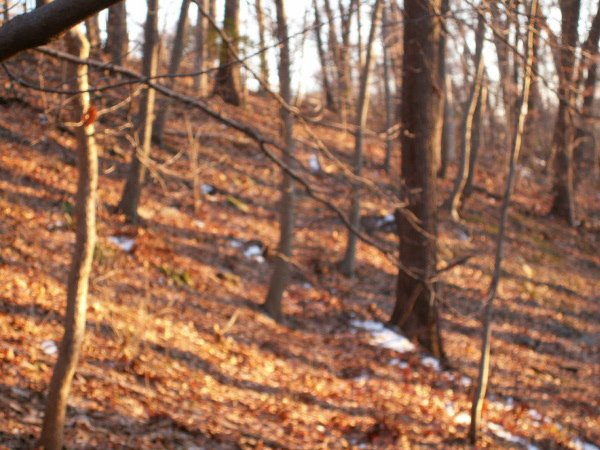
On our way back down towards Forbidden Drive and the parking lot, we decided to work a southwest-facing hillside next to the path. Almost all the snow was gone, but in this picture you can see a few patches.


The photo is blurry, but it serves to emphasize that it was not all that warm out. Still, this was the warmest patch in the woods just then, so we gave it a shot.

The hillside was littered with flat rocks, and we focused our efforts on flipping them over, and, of course, putting them back how we had found them. We saw lots of beetles, roaches, and some centipedes – all encouraging. We worked up and up, keeping our eyes on the shadow of the opposite hill rising to overtake us as the sun set. After ten minutes Jen shouted that she had found something, and I ran across the slope to see.

It was a redback salamander (Plethodon cinereus)!


It was slow and groggy, all understandable given the temperature. We hassled it for a couple shots before returning it to its rock, which you can see in this photo.


We kept looking for twenty minutes, but gave up once the sun had fallen out of sight and the shadow had completely covered the slope. It was only one salamander in an hour of looking in perfect habitat, but it was my first winter salamander.

Sunday, December 18, 2005

Yesterday (December 17, 2005) I went out to check for salamanders in a Philadelphia city park. I found nothing. This was not entirely a surprise; the temperature was in the low 40s, and the ground had been covered with snow a couple days before. The salamanders I was looking for are redbacks (Plethodon cinereus), and I haven’t read many accounts of finding them in winter.

Other species are active in winter, such as the ambystomids (remember the marbled salamander (Ambystoma opacum)) actually breed in the winter or on cold fall or spring days. Many stream salamanders remain findable if not exactly highly active during the winter, and I’ve read on the herping forums that one can find them if one looks.

Here is where I found nothing – a steep incline where I’ve found redbacks on cool, but not cold, spring and fall days. Here is an action shot of a redback I found in the spring at Valley Forge.


I am going to be going winter salamandering this winter. Winter is not highly rated for herping, but, as the sage said, herp activity records often reflect the activity patterns of herpetologists rather than herps. You’ve heard that line, haven’t you? So in the next few months I’ll be looking for critters on days that really don’t look like they should be good days for the critters. Wish me luck.

Sunday, December 11, 2005

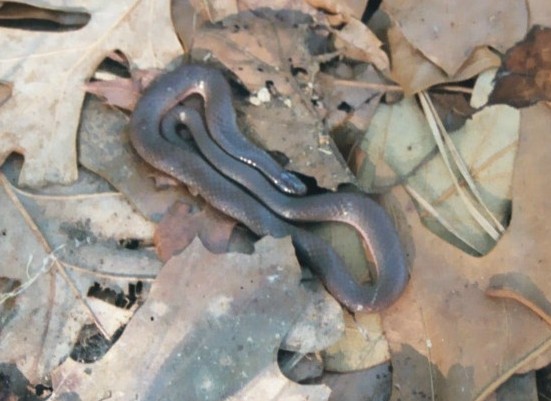
Somehow with all the worm snakes (Carphophis amoenus) I've found this summer (5?), I hadn't managed to get a good picture until the last three on October 1 in Winslow WMA in New Jersey. The first picture is of one sitting just how I saw it when I lifted the board.


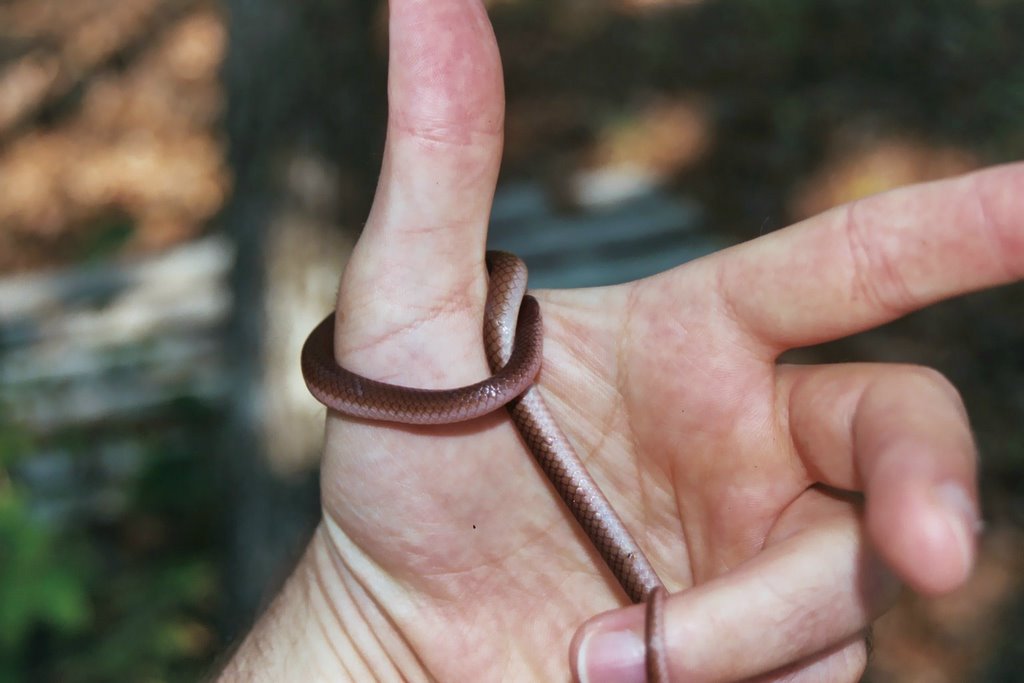
The next picture is of the worm snake caught seconds before and a few feet away. Note two things. One is that these guys are small. This is a full grown worm snake. The other is that they are very squirmy when you catch them. They do not stay still, but constantly dig their noses at funny angles around your fingers and twist out of your grasp. I can't blame them, but it does make it hard to take quick pictures of them.


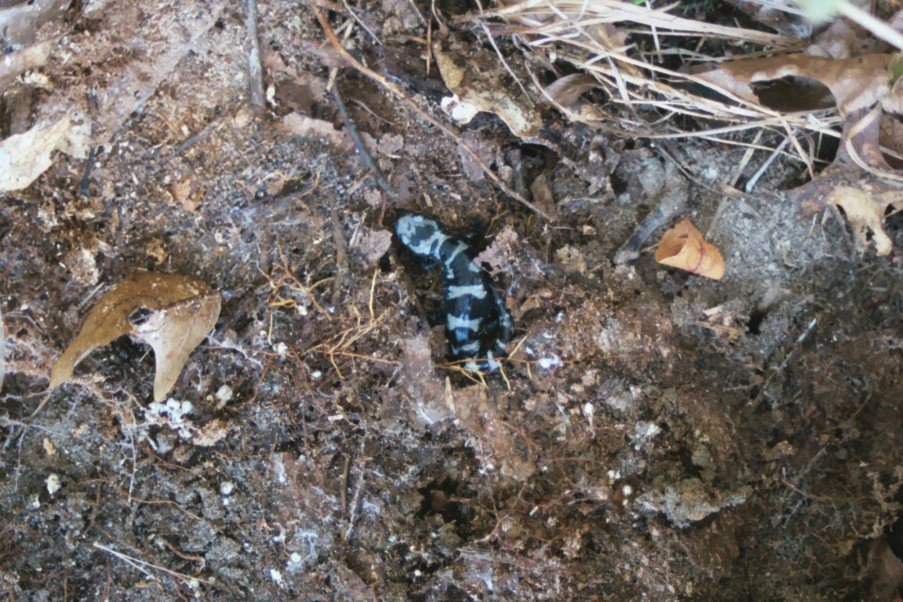
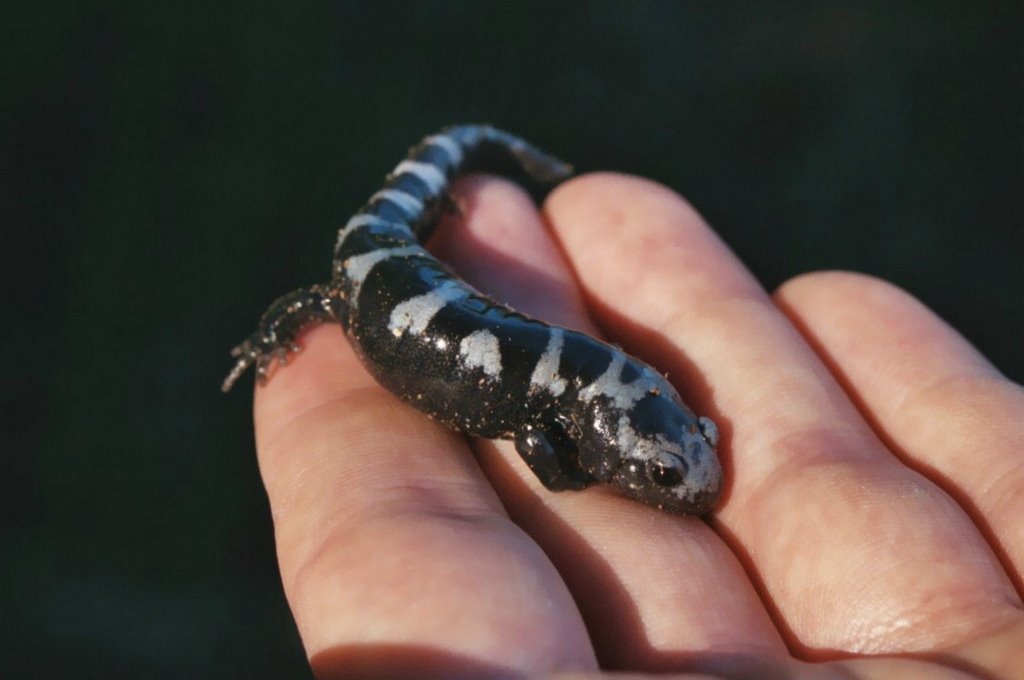
This was my most special find of the day: a marbled salamander (Ambystoma opacum). The first picture is of the salamander just as I found it under its log.


In the second picture you'll see it starting to get into its defensive posture, with head down and tail up (not quite yet, but it's taking a second to strike the pose). If you compare these to the other salamander pictures I've posted, you'll notice how pudgy it looks. The marbled salamander is from a different family, the ambystomids, than the others I've found this year, all plethodontids.

Monday, December 05, 2005

Why all the in-situ photographs? It was a chilly morning, and I credit the low temperatures for leaving the hiding frogs and salamanders cool and slow. I didn't have to restrain them to take my pictures, since they just sat there for a few moments before trying to get away.

These are from my September 24, 2005 trip to a State Game Land along Jordan Creek in Berks County. It was, as you can see in my post about the trip, a REALLY productive day for the amphibians. It had been a dry month, and they were concentrated along the bank under the flat shale rocks that are so perfect for flipping over.

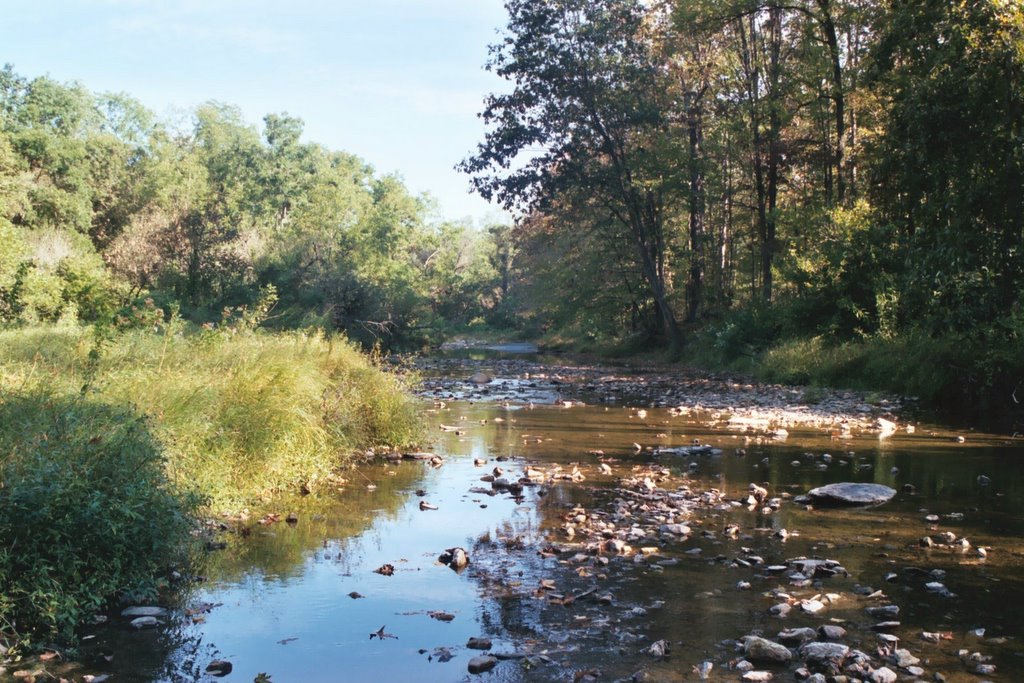
Now that I look at all the pictures, I realize I should have taken one of a rock before flipping. You can see their outlines in the dark, damp imprints around the frogs or salamanders. Here is a picture of the creek. Not a bad spot to spend a morning.


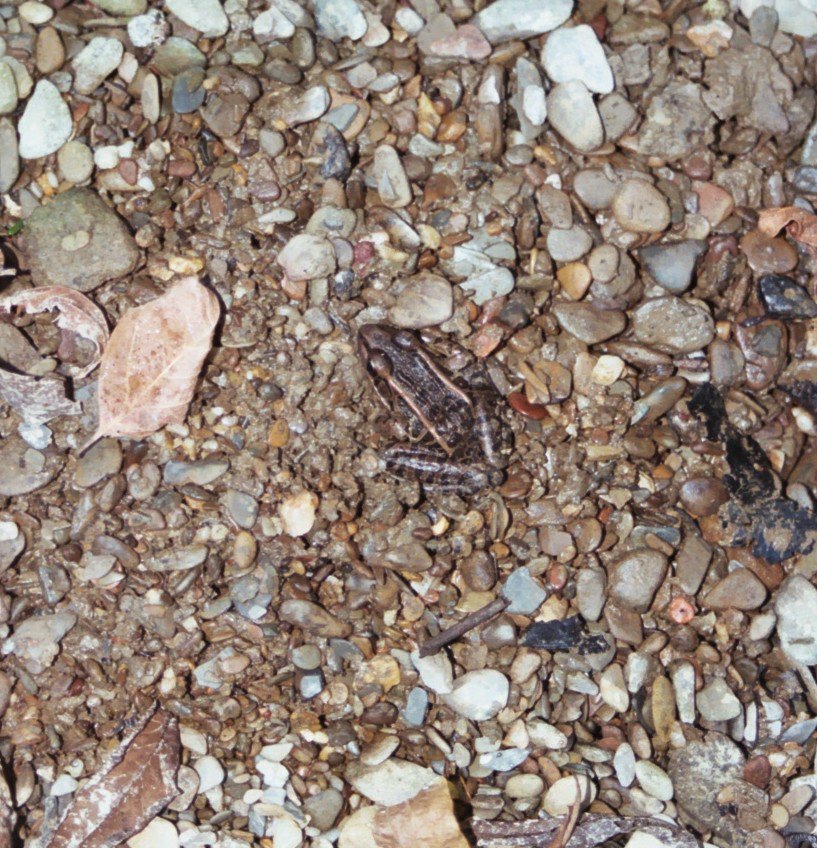
The most common were smallish (1.5 to 2 inches) pickerel frogs (Rana palustris).


They grow to about twice the size of the ones I was catching, which does make me wonder where all the big ones were hiding. Were they under bigger pieces of cover? Are they less vulnerable to dessication, and thus not so powerfully driven to the edge of the water by the drought?

Most started off a little buried into the gravel and mud. You can see that in this before and after pair.


I found a few green frogs (Rana clamitans melanota) - again about half as big as what I usually count as adults.


I found a lot of salamanders too. I'm kicking myself for not taking pictures of the two-lined salamanders (Eurycea bislineata), but I did get one of this longtailed salamander (Eurycea longicaudia).


I wandered up a dry stream bed from the creek and looked under some logs. I found this redbacked salamander (Plethodon cinereus), one of the first of the fall.


Here's someone who was hopping right out in the open. This is a Fowlers toad (Bufo fowleri). I find lots of these, and this is one of the most yellow I've seen. Maybe it's dirty, I didn't wash it off to check, but I'm curious about how much they vary by substrate.

Tuesday, November 29, 2005

It’s picture time again! Yes, this means I’m still taking my time on getting the Brazil stuff posted, but these are some cool photos. I’ll start with my September 10th trip to Valley Forge. Here is a really pretty longtailed salamander (Rurycea longicaudia longicaudia). This was not the brightest one I’ve caught, but I hope you get a sense of how pretty these guys are.


Next are two pictures of pickerel frogs (Rana palustris). The first one is not the best picture I’ve ever taken, but the second one struck me as kind of nice on its log. Both are frogs I followed into the water, through a couple of ricochets, and then back out.


On a different topic, I just got (or, to be more precise, the Walkers got me via a gift card for my birthday) Snakes of the United States and Canada by Ernst and Ernst. I have wanted this book for a while, and now that I have it, I think I’ll be reading it on every commute for the next year. It has an account of every single species of snake in the United States and Canada, and summarizes everything known about each. It's not much use to ID catches, but it is perfect for reading up on what I've found once I get home.