Sunday, June 04, 2006

We kept finding cute little northern brown snakes (Storeria d. dekayi) this weekend (June 3rd and 4th).

Jen flipped the first one Saturday under a board in the Mount Moriah cemetery, a large and depressingly run-down graveyard on either side of Cobbs Creek Parkway a couple minutes south of Baltimore Ave.

We had been collecting earthworms for my ringneck snakes along the Creek, and once we had as many as we needed, Jen suggested the walk in the cemetery. It was getting towards dusk, and the clouds left over from the day’s rain were painted a spectrum of sublime pinks and oranges. I love cemeteries for walking or jogging - wide open green spaces with no traffic and majestic old trees.

We had gone for walks a couple times in the section of the cemetery on the west side of the parkway (and had found a few redback salamanders – Plethodon cinereus), but this was our first exploration of the east section.

The walking was lovely for the first twenty minutes or so, but there wasn’t very much to look under, so the herping was pretty subdued. The east section of the cemetery had a lot less trash dumped in the overgrown plots than the west side. This is, of course, a good thing – dumping trash in a cemetery is about as sleazy as it gets – but it made for less artificial cover for herps to hide under.


Jen had walked a little ahead of me; I think it was while I was frowning at some broken headstones. She knelt down to turn something over and then shouted. I came trotting, and when I reached her she picked the board back up to reveal a brown snake.
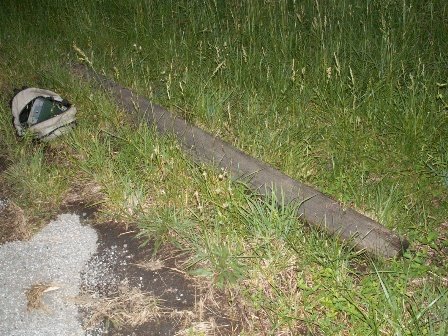


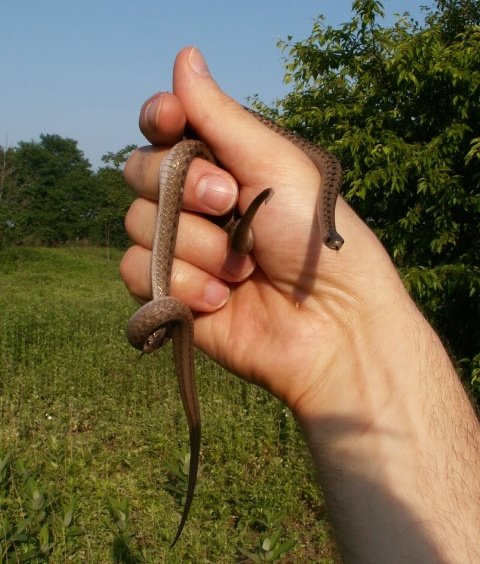
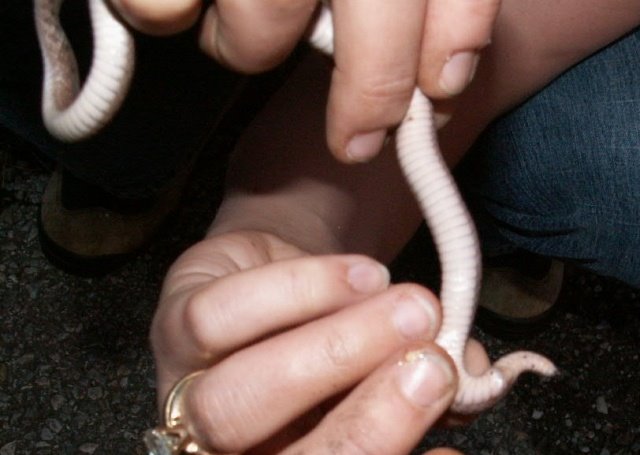
This one had a reddish cast to it, and I think it might have been getting ready to shed. More interesting, though, was its tail, which ended in a healed-over stump. It seems to have barely escaped from something a while ago.



I have been studying the Google Earth satellite map of Philadelphia, and I headed for some promising green patches along the Schuylkill in Southwest Philly on Sunday.

I rode my bike down Woodland Ave. and then Lindburg Ave. to 63rd St. My plan was to head north, trying each numbered street to the east. The area at the end of 63rd St. looked great from outer space, but when I got there I found a gate. Google Earth can show you the ground to a resolution of a few feet, but that’s still too indistinct to make out chain link or barbwire.

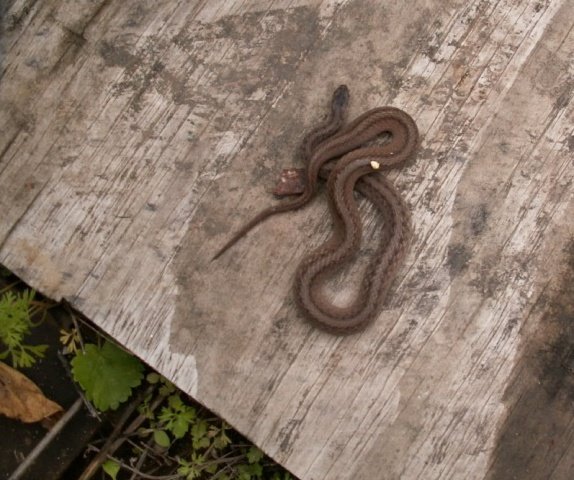
I tried 61st St. and had better luck in the vacant industrial lot at its end. I locked my bike to a twisted heap of metal in the middle of the lot and started turning over trash with my cultivator. There was a lot to flip, but it only took me about five minutes to uncover this little girl.



The next lot I tried was too thick with waist-high weeds to see the ground, and I didn’t see much trash, so I gave up and hit the road again.

I really, really, really wanted to check out another lot north of there along Eastwick, but it was next to several blocks of decrepit rowhouses. I felt exposed, and I’m still a little afraid of looking under trash where I could imagine someone keeping his stash. I worry some teenage dealer with a gun will ask me what the hell I'm doing and then shoot me when I try to explain that I'm looking for snakes. Which sounds more likely, looking for snakes in a vacant lot or looking for his heroin?

I found another good, overgrown lot, this time well shielded from view by some warehouses, but there was a tow truck parked next to it with the passenger door open and the truck audibly idling. I don’t know why someone would jump out of a running towtruck into an overgrown vacant lot (a herper would have shut off the motor), but I didn’t want to find out, so I checked out Bartram’s Garden.

To the credit of the staff there, there was no debris or trash to look under, and I found nothing under logs or rocks. I did have a lovely time walking around, though. Finding snakes is a lot of fun, but flipping rotting boards, rusty car parts, and other trash can be a little disgusting after a while. Strolling around a clean meadow and well-tended gardens left a sweeter taste in my mouth for the last short leg home.

Totals:

1 brown snake each day

Monday, May 29, 2006

Ah, the smell of snake musk in the morning! It’s the smell of success, and there’s no better way to start the day.

I’ve been striking out a lot lately. Maybe striking out is not the right baseball metaphor – I’ve been finding a few easy-to-find herps, so maybe I’m hitting foul balls a lot lately, but on Memorial Day, instead of driving an hour to the Pine Barrens or an hour and a half up into the hills and then wasting my time in 90 degree weather, I turned my attention back to West Philly.
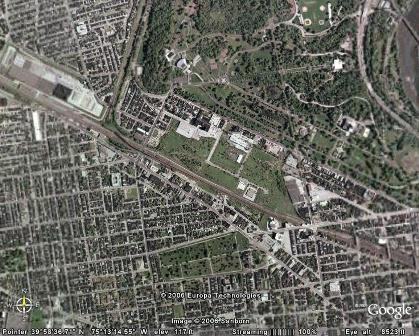
Back in early March I posted about scouting out a vacant, overgrown industrial lot near 49th St., a block south of Fairmont Park West and north of the railroad tracks. Here's the satellite shot from Google Earth.


A nearby lot is slated for development into a strip mall featuring a Lowe’s, so I had contemplated a rescue mission there. The idea had been to catch as many brown snakes as I could at that lot before it’s all blacktop and retail and release them somewhere safer.

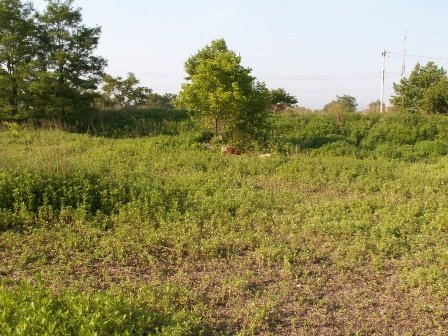
The lot that will soon be the hardware store is all fenced off, however, so I had checked the largest of the lots that aren’t fenced off. There might not be a need for rescue mission here, but it looked like great northern brown snake (Storeria dekayi dekayi) habitat, and I’ve been really interested in finding more of these little snakes. They're the only snakes that thrive in row-house-urban Philadelphia.


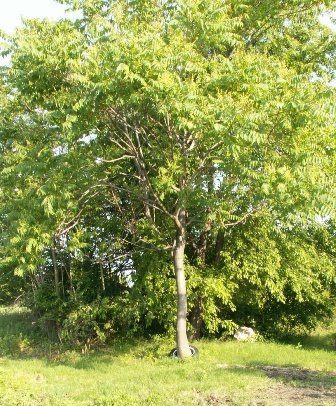
I'm not sure how long this lot has been vacant, but it's apparently been untended long enough for this tree of heaven (an invasive exotic) to grow up through a tire.


It’s a lot of fun to stumble into herp finds, but I get a far deeper satisfaction out of scouting out good habitat, waiting for ideal weather, and finding my intended quarry there. Today, I found three brown snakes on that overgrown field of weeds, scrubby bushes and trees, collapsed walls, and trash. They musked their little tails off on me, but I was ecstatic.

I tried once before earlier this spring and found nothing in spite of what seemed like pretty good weather (maybe too dry). Today I hopped over the berm that runs around the edge of the lot, and found two brown snakes under the third or fourth piece of cover I tried: this old wooden beam.


The two snakes looked pretty similar, but one had darker spots, while the other had a duller look to her. I tried some posed picture on top of the beam. They came out a little over-exposed, but at least the snakes held still. The temperature helped. The weather was sunny and in the upper 60s, the day just heating up, and the snakes were cool to the touch.


Both looked a little plump towards the rear. I did not sex them, but I’m willing to bet they’re gravid.

I tried more cover and found nothing but the usual ants, termites, centipedes, and whatnot. I steered clear of the horse grazing in the middle of the lot, and after about forty-five minutes, I headed back to my bicycle.

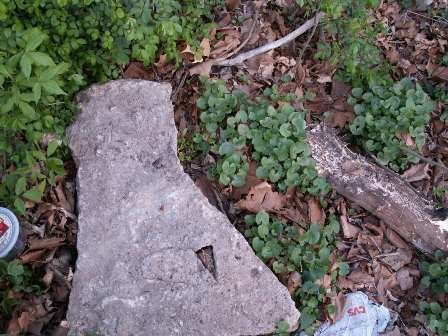
There are some concrete chunks at the top of the berm at the edge of the mowed section near the sidewalk. I was standing by my bicycle when I had a feeling about one of those chunks.


I walked back up to the chunk, lifted, and yippee! This one was the prettiest, in my opinion, with a slightly grayer shade down the back.


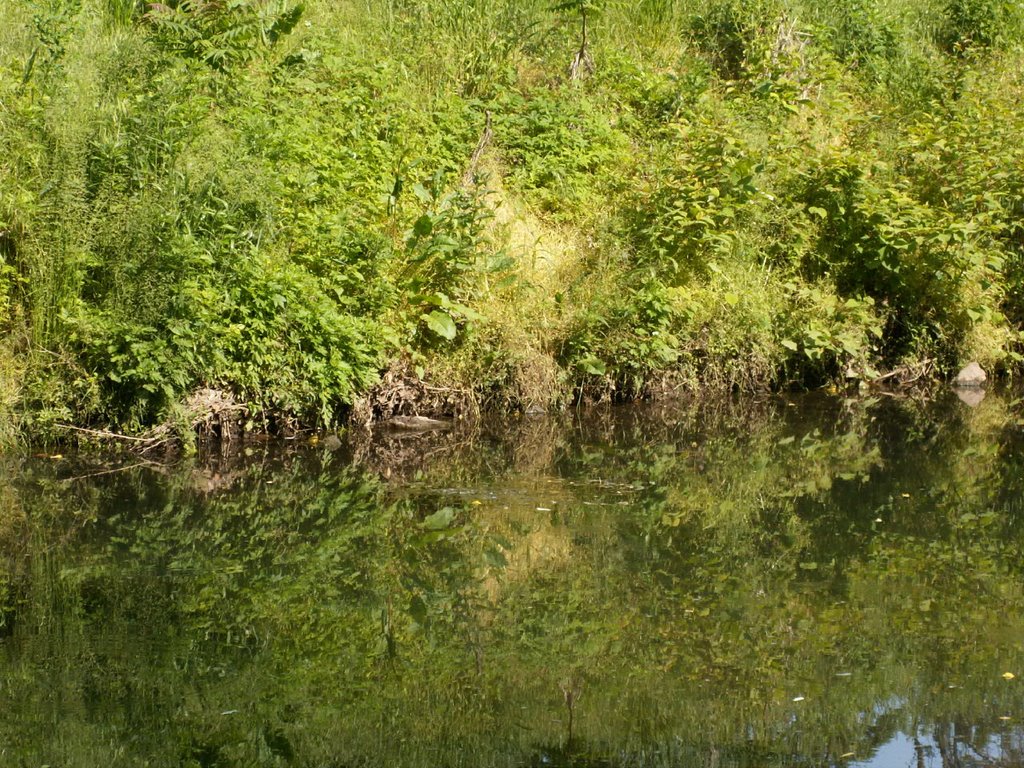
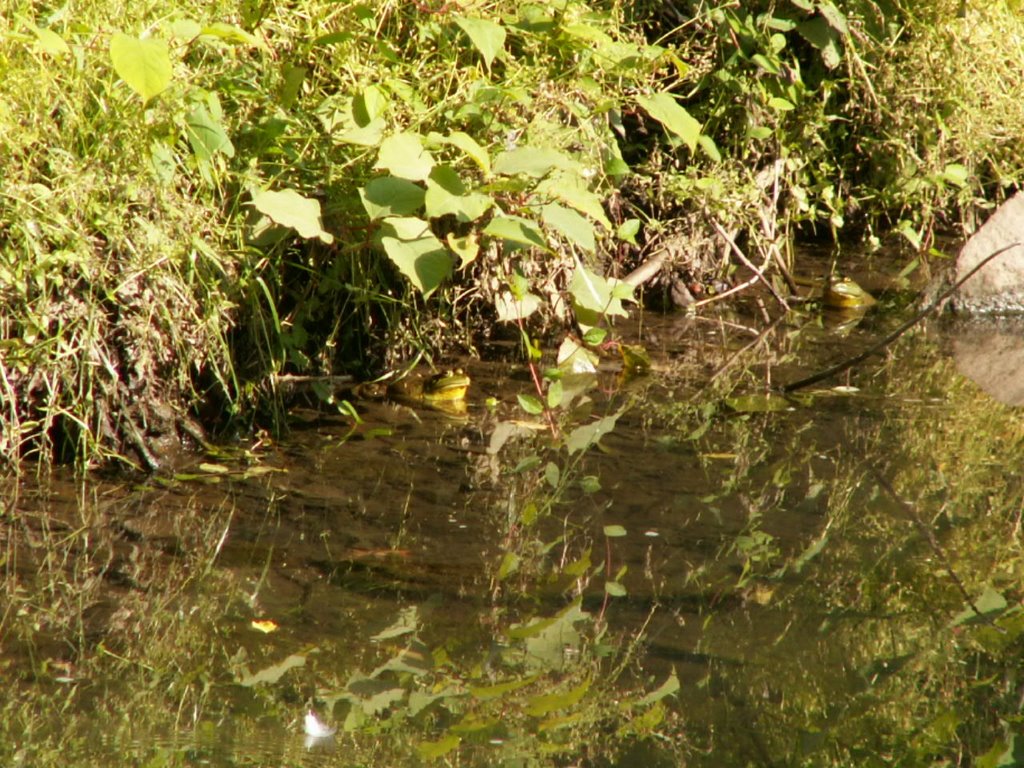
After my brown snake triumph, I rode my bike over to Cobbs Creek to see if I couldn’t round out the morning with a garter snake (Thamnophis sirtalis sirtalis). I had no such luck, but I immediately heard the deep bellows of bullfrogs (Rana catesbeiana) calling from the creek, and I went down to look. There were four calling in a row from the shallows, about ten to fifteen feet apart from each other. I was a little surprised at how close they were to each other – they call to stake out territory and attract females, and I figured they would want more space.

Here are the four in the shallows. Can you spot them all?


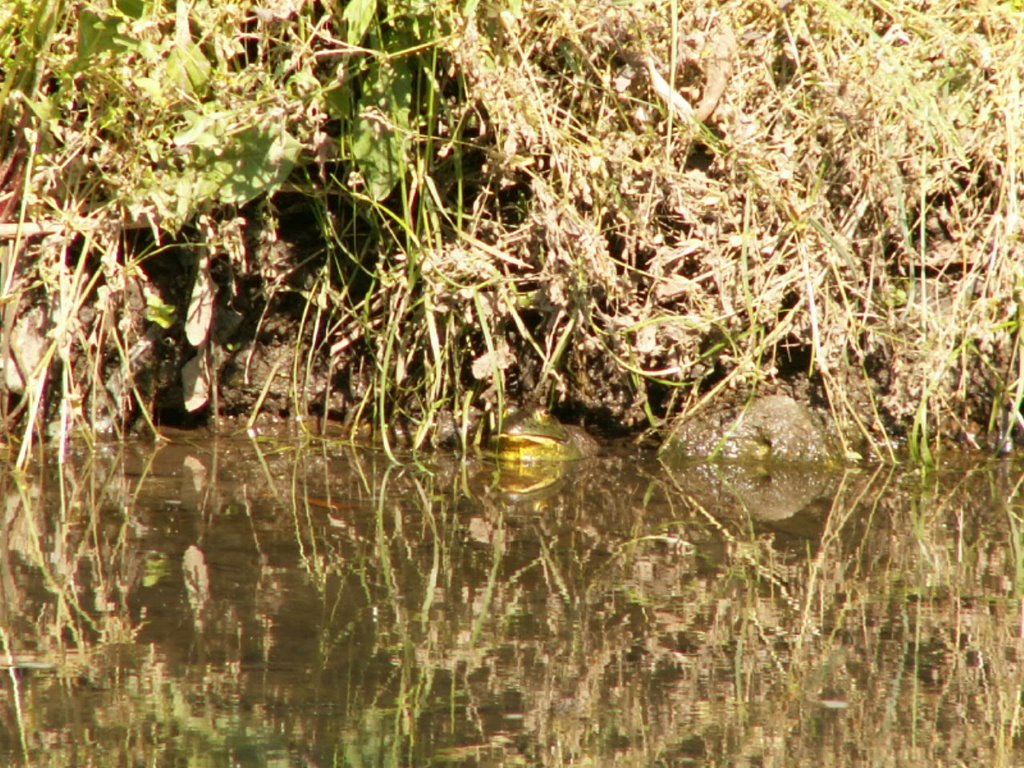
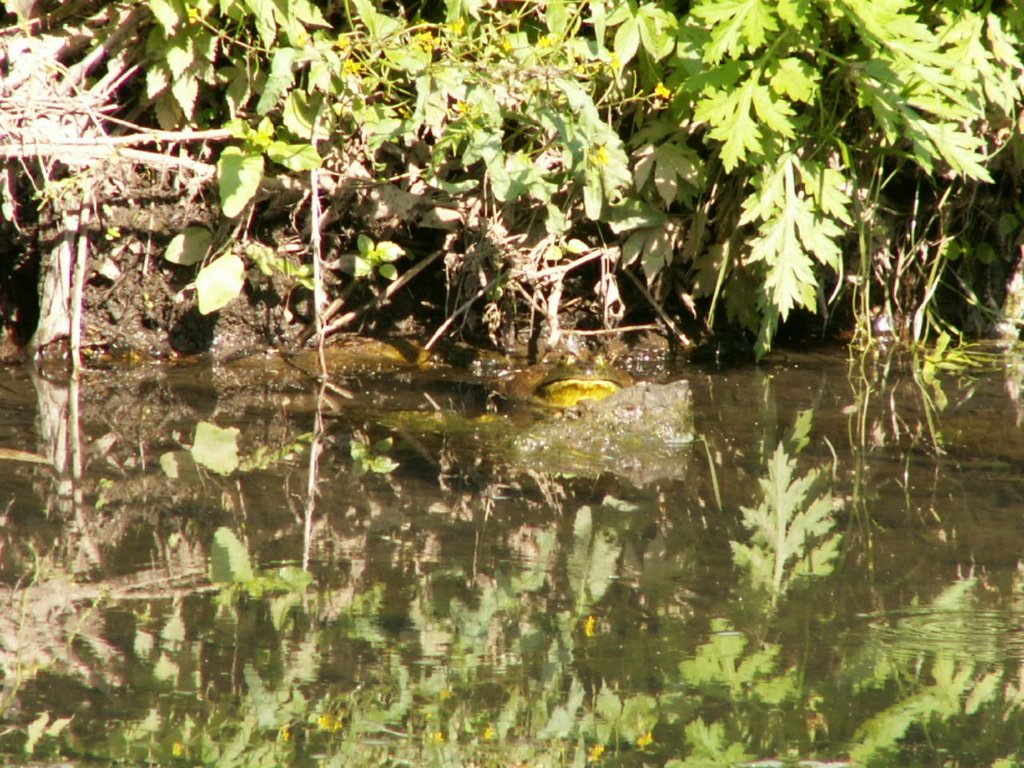
Here are some close-ups.


Only one seemed to be paying attention to his neighbor.


No one was paying attention to the duck.


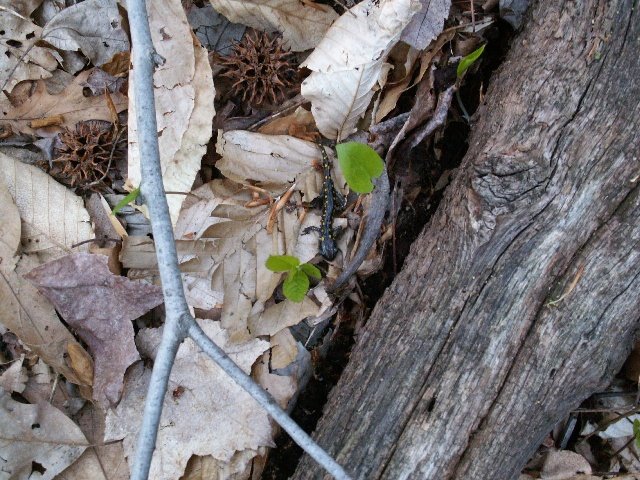
I walked around the west side of the creek and hunted for worms. I was impressed to find a leadback redback salamander (Plethodon cinereus) under a log. It was already in the 70s, and it’s getting late in the season to find redbacks. I was also surprised by the location. I think of redbacks in that area as living on and around rock outcroppings that make for good retreats in hot or freezing weather. This one was living on the floodplain with nothing uphill but houses and asphalt.


Totals:

3 brown snakes
4 bullfrogs
1 redback salamander

Sunday, May 21, 2006

I’m starting to develop a slightly slap happy resignation to finding nothing major when I drive more than 40 miles to go herping. I'm not angry about it anymore, I just shrug and chuckle.

Today (Sunday May 21) I got nearly-skunked in Pennsylvania for a change. I headed back out I-78 to try Blue Mountain a second time for timber rattlesnakes (Crotalus horridus). The goal was to find some rattlers basking in the morning sun.
The forecast had been for partly cloudy weather with a chance of rain later in the afternoon. It had been raining during the week, so the ground wasn’t too dry. It was almost entirely cloudy, cool (50s), and windy on top of that ridge, though, so there was no sun to draw any critters out onto the surface.

Tent caterpillars were crawling around. They kept catching my eye with an almost-herp form and pattern.


Close to the end it hit me that I hadn’t even found any redback salamanders (Plethodon cinereus). Not finding redbacks this time of year is like having your friends all leave you alone at a party – you kind of wonder what’s wrong with you. They don’t think you’re cool anymore? Did you do something to offend them?

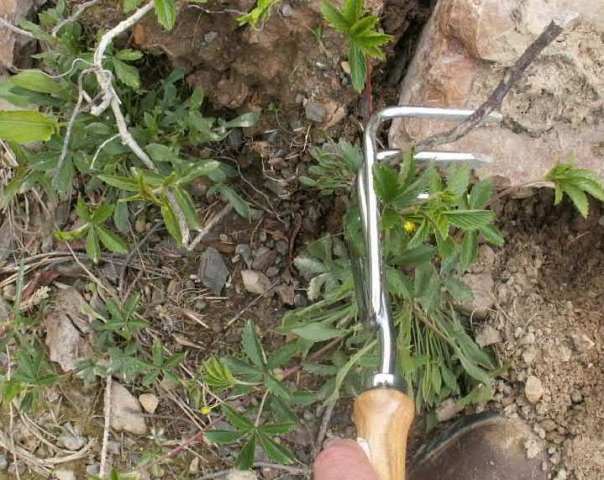
Luckily I found two towards the end. Here’s the second one pretty much as it was under the rock (I moved a little stone for a better shot).


That’s my cultivator holding back the plants for the release shot. I’m not sure if I’ve properly introduced my cultivator yet. Doesn’t it look scary? I could imagine it as the prop for a horror flick about a mad gardener.

The cultivator is my favorite herping tool. It lets me turn over soggy logs without them falling to pieces, and if I want them in pieces, it can tear them apart. It gets a better grip under rocks than my fingers, and, when I’m turning over trash and debris, I don’t have to worry about nails or broken glass. It also saves me about six inches of leaning over. That might sound trivial, but it adds up over the course of four hours and hundreds of rocks and logs.

Here’s the cultivator showing something I find under logs a lot more than herps: termites. See all those little rice-grain-looking things?


I checked out the pond in which Scott and I had found the newts and egg masses at the beginning of April. I was surprised to see that there were still egg masses there. I can’t imagine that the eggs could still be developing; the larvae must have hatched out by now. I wonder how long the masses linger before they disintegrate.


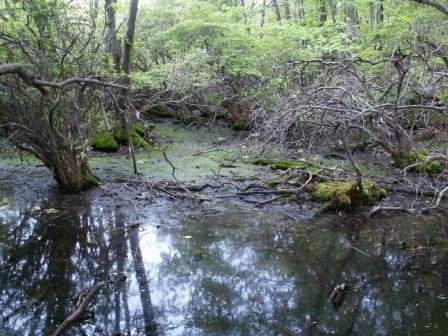
I also tried out the bog next door, but nothing was hopping or crawling around.


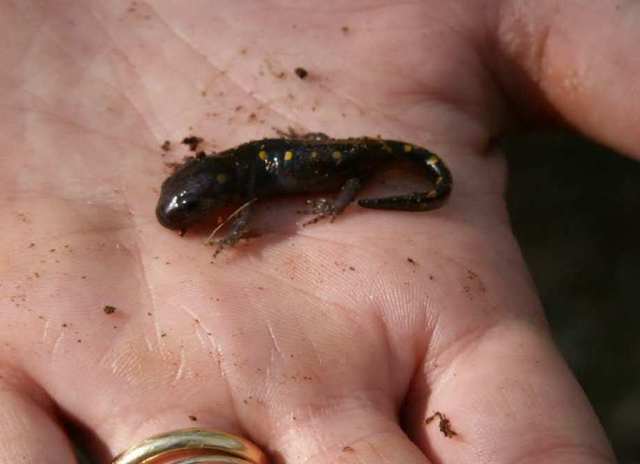
I did see one larval spotted salamander (Ambystoma maculatum), but I did not get a photo of it. I think this is what became of all those wood frog (Rana sylvatica) eggs.


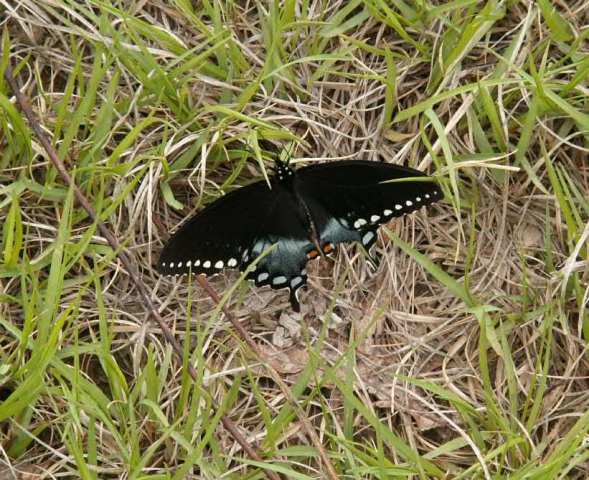
Last, here are some pretty non-herps I decided to take pictures of. The first is some kind of swallowtail butterfly I found resting on the grass.


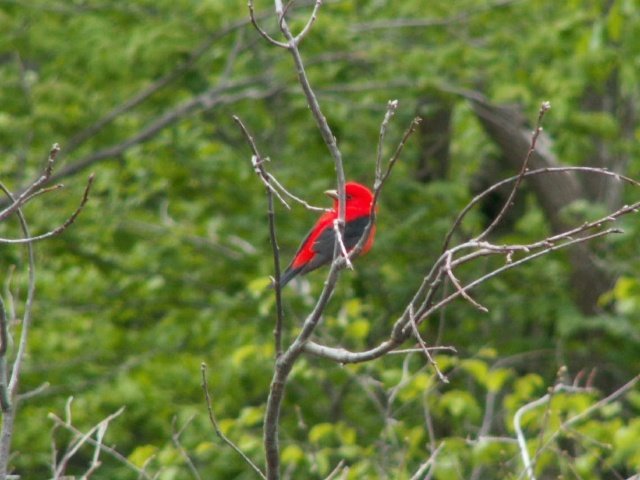
This bird is a scarlet tanager. I usually don’t take photos of birds, but this one blew me away.


Totals:

2 redbacks
100+ tadpoles
1 spotted salamander larvae

Wednesday, May 17, 2006

I have been late posting this week because I have little to post about.

I went again to the Pine Barrens, and I found even less than the week before. I saw one fence lizard (Sceloporus undulatus hyacinthinus) and found a pond with lots of calling green frogs (Rana clamitans melanota) and southern leopard frogs (Rana ultricularia).

That’s not much for four or five hours of herping. These Pine Barrens feel a little like hitting my head against the wall. I research where the herps certainly are, I get my hopes up, and then I walk around for several hours finding none of them.

I’d feel really pathetic if other herpers I know weren’t also striking out in the Pine Barrens. It seems that no one else is finding much besides racers (Coluber constrictor constrictor), worm snakes (Carphophis amoenus), fence lizards, and turtles.

I am ready to give up on daytime herping in the Pine Barrens for the summer. I won’t give up on the Pine Barrens entirely; I think I’ll shift my attention to the hills and urban Philly until it gets really hot and then get into road cruising at night.

Totals for May 14, morning and early afternoon (sunny sky, temps rose low 60s to low 70s):

- 1 fence lizard
- 10+ green frogs
- 5+ southern leopard frogs

Monday, May 08, 2006

"Voices of the Night: Calls of the Frogs and Toads of Eastern North America" saved my trip to the Pine Barrens yesterday.

I had had yet another trip to the Pine Barrens that started with visions of beautiful pine snakes (Pituophis melanoleucus melanoleucus), cute spotted turtles (Clemmys guttata), and majestic timber rattle snakes (Crotalus horridus) and ended with the frustration of a few fence lizards (Sceloporus undulatus hyacinthinus), a squirmy worm snake (Carphophis amoenus), and frog calls.

It turned out in the end that those frog calls made the trip, but I had to get home and figure out what they were before I knew it.

I had headed towards some reputed pine snake dens in southwestern Atlantic County and adjacent Burlington County. I spent four hours walking sand roads and firebreaks, flipping every piece of trash or log I could find, and stopping to locate whatever kept running away into the leaves to get away from me.

Most of the time it was birds; robins and sparrows rustle leaves in the stops and starts that make me think ‘lizard!’ There were some actual lizards in there too, though.


I usually think of myself as really bad at catching lizards. I’m slow and too worried about squashing them to grab for them fast enough. On Sunday, though, I was doing something right. I think it was the blind grab: fence lizards like to keep a tree trunk or a log in between themselves and whatever at that moment is trying to catch them. When you hear that startled rustle of leaves and see the lizard dash off, as likely as not it has ended up on the other side of a tree trunk or log. If you move into its field of vision, it will move around the trunk or log to the other side.


Thus the best way to catch the lizard is to keep most of you hidden on that other side and then, as fast as you can, grab for where you think it is. Here's a female I caught; the male would have bright blue patches on its chest and under its throat.


I found one hot spot in my trip: a stream that had been partially dammed by the path and had spread out, shallow and boggy.


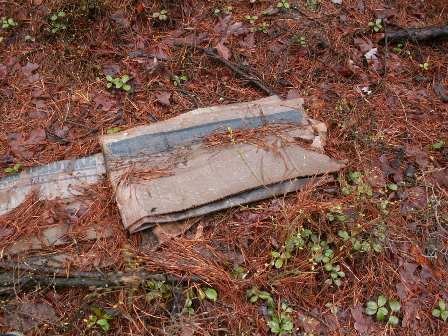
I heard a calamitous splashing as I got close – turtles that must have seen me before I had seen them and had jumped from their basking spots. I heard one green frog (Rana clamitans melanota) twanging from the edge, and I saw some really promising tar paper and other debris scattered on the ground near the water. I’m not sure if the debris had been left out to lure herps, since it looked like a great spot for eastern kingsnakes (Lampropeltis getula getula), but I did find a worm snake that produced a lot more feces and musk than I expect from such a little snake. It just would not stop squirming for long enough for me to get a good photo (or I was not patient enough to wait long enough for it to calm down).


I checked this stream again after a few hours of fruitless wandering. I was hoping to sneak up on those turtles, but I didn’t even hear them trying to get away this time – there were just quiet, empty stumps and logs when I got there. After I had quietly stalking around for a few minutes, though, the frogs started up again. At first it was just a couple green frogs with their classic loose-banjo-string call, but then something else started honking in a middle/high pitch. Another few similar-sounding frogs joined in, and suddenly there were four or five of them going at it in a vociferous shouting match that just as suddenly stopped, leaving no noise but the wind.

I didn’t think much of it at the time – just that I needed to look up whatever those other frogs were on my frog calls CD. The tree frogs are at the beginning of the disk, and after I had eliminated other, more common, species, I tried the hard-to-find (indeed listed as threatened by the state of New Jersey) Pine Barrens tree frog (Hyla andersonii), and that was it! I tried the other possible candidates, but nothing else fit.

The temperatures on Sunday 05/07/06 ranged from the 50s in the morning to around 70 by mid-day. It was sunny throughout the day.

Trip Totals:

4 fence lizards
1 worm snake
2-3 green frogs (heard)
4-5 Pine Barrens tree frogs (heard)
? turtles (heard)

Sunday, April 30, 2006

I’d like to find a spotted turtle. Even more, I’d like Jen to find a spotted turtle (Clemmys guttata). They are the cutest turtles out there, cuter yet than their smaller relative the bog turtle (Clemmys muhlenbergii). Spotteds are small black turtles with one or a few bright yellow polka dots on each scute. You’re not likely to see spotted turtles at big lakes or rivers; these guys like shallow water in the woods.

I’ve never seen one in the wild, but another herper reported seeing them at a park in Bucks County, and I decided to head out that way with Jen. It was late in the day on Saturday, which was a problem, because spotted turtles are most active in the morning.

We didn’t see any live turtles (I think this shell was once a box turtle - Terrepene carolina):


We did have a great time with salamanders. The redbacks (Plethodon cinereus) I expected to find, but the spotted salamanders (Ambystoma maculatum) were a surprise.

I have been close to tears over the nights of perfect spotted-salamander-breeding weather that I have missed out of town or otherwise incapacitated. I know they sometimes turn up under cover, but I’ve turned over a lot of logs and never seen one.

Jen found three. Two were little, about two inches long; she was scandalized by the size of the third, a hefty adult of about seven inches. Unlike the squirmy redbacks, they just sit there limp if you handle them gently, making them really easy to photograph:


My pen broke, so I was unable to record the details of the eighth through forty-fourth redback salamanders Jen found. On cool spring days when the ground is damp to wet, we’ll find redbacks under almost half the logs or rocks we check. Here are a few of the little guys. I almost wonder what the point is of photographing them. Maybe now that I have gotten past simply recording their presence I can work on finding the perfect redback salamander and taking the perfect photograph of it. I’m not there yet.


I’ll end with this wood frog (Rana sylvatica). I didn’t catch it, and I didn’t try very hard once I got the photograph. Am I lazy to think that frogs are too much trouble to catch once you know what they are?


Thursday, April 27, 2006

I’m finding snakes again around Philadelphia. They were probably out earlier in the season, but I haven’t been out enough myself.

Winter and early spring are dominated by the amphibians – the salamanders that breed on cold rainy nights and the tiny, hard to photograph frogs that make such a racket around ponds as the weather starts to warm up.

That said, the snakes do come out earlier than you might think – I’ve read plenty of reports of them sunning outside hibernation dens even in near-freezing temperatures – but right about now they’re really moving.

The weather is not too hot to be uncomfortable, some are moving from hibernation dens into their summer habitat, many are cruising around looking for love, and all of them are hunting and feeding to make up the weight they lost over the winter.

Once the temperatures get up into the 80s, many of them will switch to a more nocturnal lifestyle and stay underground during the day to avoid the heat, and I won’t be able to find them by looking under logs, rocks, and trash like I can now.

I found the first in Cobbs Creek Park on April 20 (75 and partly cloudy at 6:30pm). I was out looking for worms, and I decided to check my favorite logs. I was shocked to find that someone had rolled them over and had not rolled them back. In herping, this is the worst of all sins: not replacing cover. Garter snakes (Thamnophis sirtalis sirtalis) (and worms, for that matter) like those logs to hide under because of the cool, damp soil beneath. Now the logs are resting on dry grass, and the ground they had been protecting is all dusty and bare.

So, I found the garter snake under this piece of concrete instead of under my reliable logs. I'm not sure that ruining those logs as cover hurts the snakes, but it does make finding them harder.


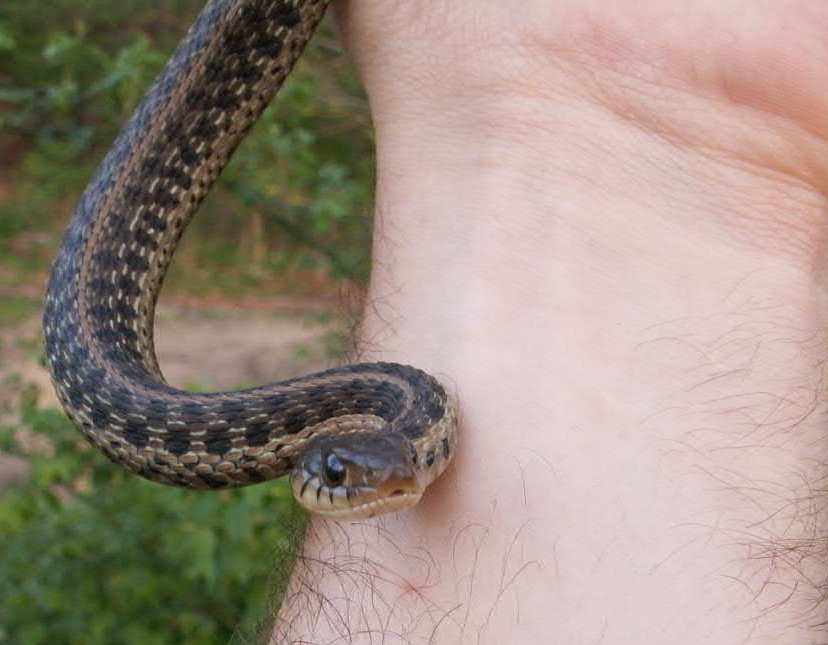
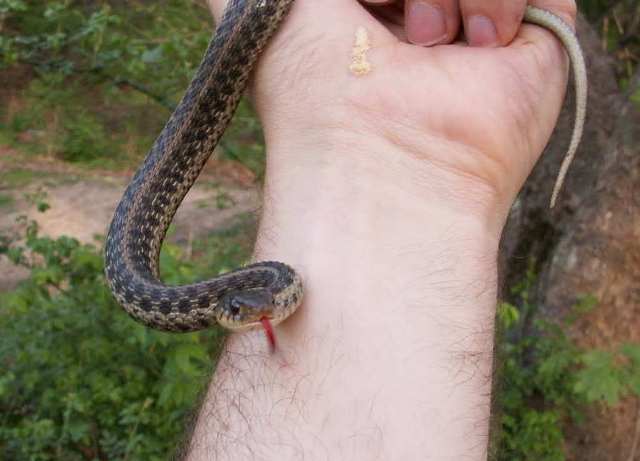
I like how garter snakes look when they’re studying the camera. It knows something’s going on inside that box but it's not sure if biting it is a good idea.


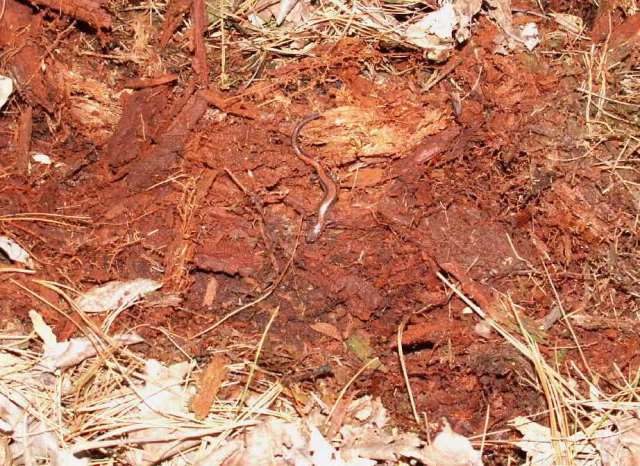
Here’s snake number two, a worm snake (Carphophis amoenus) I found under an old, soggy shirt in Winslow WMA on April 23. It was small, even for a worm snake, and I had trouble getting a good photo of the squirmly little thing.


Here it is burrowing back under. I thought it was a throw-away shot, but the more I looked at it the more I liked how it showed the urgency with which these little, vulnerable snakes thrust themselves underground.


I also found some redbacks (Plethodon cinereus) at Winslow:


I found three under this piece of cardboard:


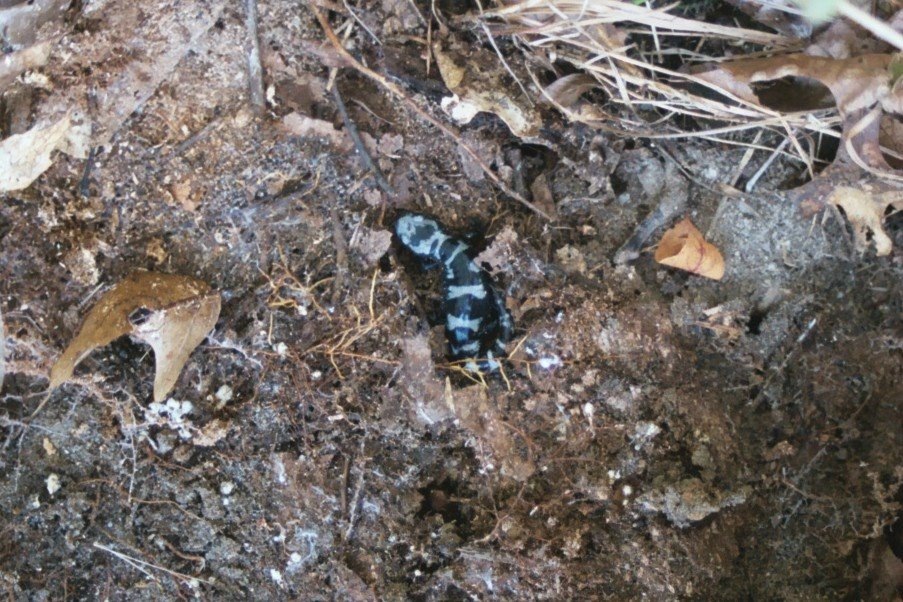
The most exciting salamander of the day was this marbled salamander (Ambystoma opacum) I found under a board in this dumpsite:


Notice how much darker it is than the one I found in October a few hundred yards away:


Marbled salamander males are more brightly colored than the females, so I’m assuming the one I just found is a girl, while the one in October was a boy.

Totals:

April 20, 2006

1 garter snake

April 23, 2006 (generally damp and in the low 60s in the morning and early afternoon)

4 redback salamanders
1 worm snake
1 marbled salamander